Tesla Powerwall 3 Review: Is It the Best Home Battery for 2026?
Full review of the Tesla Powerwall 3 home battery: 13.5 kWh LFP capacity, 11.5 kW output, integrated solar inverter with 6 MPPTs. Rating: 8.5/10.
Pros
- ✓13.5 kWh capacity in a single wall-mounted unit
- ✓11.5 kW continuous output powers an entire home
- ✓Built-in solar inverter with 6 MPPTs (up to 20 kW DC input)
- ✓LFP battery chemistry for long cycle life and safety
- ✓Scales up to 4 units (54 kWh) for large homes
- ✓Tesla app with real-time monitoring, Storm Watch, and grid export controls
Cons
- ✗Requires Tesla Certified Installer, no DIY option
- ✗291 lbs wall-mounted unit needs professional structural assessment
- ✗Premium pricing compared to modular competitors
- ✗Limited availability and long wait times in some regions
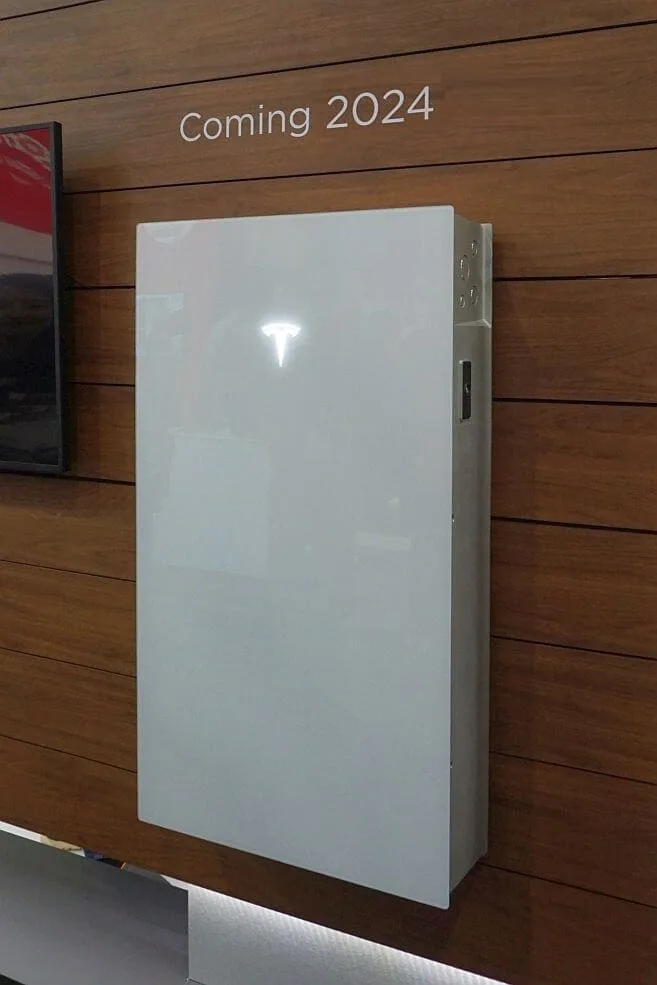
The Tesla Powerwall 3 packs 13.5 kWh of LFP battery storage and 11.5 kW of continuous AC output into a single wall-mounted unit. Its built-in solar inverter with six MPPT channels handles up to 20 kW of DC solar input, eliminating the need for a separate string inverter. For whole-home backup and solar self-consumption, it remains one of the strongest options on the market (8.5/10).
What Makes the Tesla Powerwall 3 Different?
The Powerwall 3 represents a major redesign from its predecessor. Instead of needing a separate solar inverter and gateway, Tesla combined everything into one unit. The result: a 13.5 kWh battery with a full hybrid inverter built right in. One box on your wall handles solar conversion, battery storage, grid interaction, and backup power.
That integration matters for homeowners because it cuts installation complexity and cost. Fewer components means fewer points of failure, less wiring, and a cleaner look on your garage wall. If you are building a new solar-plus-storage system from scratch, the Powerwall 3 is hard to beat on simplicity alone.
For those still deciding between portable and permanent solutions, our guide on choosing a power station for home backup covers the key differences.
Key Specifications at a Glance
| Spec | Detail |
|---|---|
| Usable Capacity | 13.5 kWh (LFP) |
| Continuous AC Output | 11.5 kW |
| Peak Output | 185 A (short duration) |
| Solar Input | 20 kW DC (6 MPPT channels) |
| Battery Chemistry | Lithium Iron Phosphate (LFP) |
| Round-Trip Efficiency | ~90% |
| Dimensions | 43.5 x 24 x 7.6 in |
| Weight | 291.2 lbs (132 kg) |
| Scalability | Up to 4 units (54 kWh) |
| Operating Temp | -4°F to 122°F (-20°C to 50°C) |
| Warranty | 10 years |
How Much Power Can It Actually Deliver?
According to Tesla's official Powerwall specifications, the Powerwall 3 delivers 11.5 kW of continuous AC power. That is enough to run nearly every appliance in a typical home at the same time: central air conditioning, electric dryer, oven, and EV charger. Very few home batteries match this output from a single unit.
To put that in real-world terms:
- Central AC (3,500W) + refrigerator (150W) + lights and electronics (500W): 4,150W total, well within the 11.5 kW limit
- Running a 7.2 kW EV charger alongside household loads: Still under capacity
- Full kitchen (oven at 2,500W, microwave at 1,200W, dishwasher at 1,800W): 5,500W, handled without strain
The 13.5 kWh capacity determines how long that power lasts. Running essential loads (refrigerator, lights, internet, phone charging) at roughly 1 kW total, the Powerwall 3 keeps your home running for about 12-13 hours overnight until your solar panels start producing again the next morning. If you have a home EV charger drawing 7 kW, that same battery drains in under two hours, so plan your charging schedule around solar production.
What About the Built-In Solar Inverter?
This is the Powerwall 3's biggest advantage over the competition. Six independent MPPT channels accept up to 20 kW of DC solar input. That handles large residential solar arrays without needing a separate string inverter.
Each MPPT channel tracks independently, so panels on different roof faces or with partial shading still produce at their best. Most standalone inverters offer two or three MPPT channels. Six channels give you more flexibility in panel placement and better overall production from complex rooftops.
For homeowners adding battery storage to an existing solar system with its own inverter, this feature matters less. But for new installations, combining the inverter into the battery saves $1,000-$2,000 in equipment and installation labor.
Tesla App and Software Features
The Tesla app provides real-time monitoring and control that sets the standard for the industry:
- Energy flow visualization: See exactly where your power comes from and goes, second by second
- Storm Watch: Automatically charges the battery to 100% when severe weather is forecast
- Self-consumption mode: Maximizes solar use and minimizes grid purchases
- Time-based control: Charges from the grid during off-peak rates and discharges during peak pricing
- Grid export controls: Participate in utility programs that pay you for sending stored energy back to the grid
- Over-the-air updates: Tesla regularly adds features and improvements remotely
The software is one area where Tesla consistently outperforms competitors. The interface is clean, the data is detailed, and the automation options (Storm Watch in particular) add genuine value that you do not get with most other home batteries.
Installation: What to Expect
Unlike portable power stations such as the EcoFlow DELTA 2 Max, the Powerwall 3 requires professional installation by a Tesla Certified Installer. This is not a DIY project. At 291 lbs, the unit needs secure wall mounting with proper structural support, plus electrical connections to your main panel and solar array.
Typical installation takes one to two days and costs $1,500-$3,000 for labor, depending on your location and electrical panel complexity. Some homes need a main panel upgrade to accommodate the Powerwall, which adds cost.
The installation-only model is both a strength (professional quality, permitting handled for you) and a weakness (higher upfront cost, limited installer availability, potential wait times of weeks or months in high-demand areas).
Who Should Buy the Tesla Powerwall 3?
The Powerwall 3 fits best for:
- Homeowners installing new solar-plus-storage systems who want one integrated unit
- Households in areas with frequent outages that need reliable whole-home backup
- Time-of-use rate customers who can save money by shifting grid consumption to off-peak hours
- Tesla vehicle owners who benefit from the unified Tesla energy ecosystem
- Large homes that need the 11.5 kW output to run high-draw appliances during outages
It is less ideal for renters (permanent installation required), homeowners who already have a solar inverter they are happy with (the built-in inverter becomes redundant), or budget-conscious buyers who can get comparable storage for less from modular alternatives.
The Verdict: 8.5/10
The Tesla Powerwall 3 earns a strong 8.5 out of 10. The integrated solar inverter with six MPPTs is a genuine innovation that simplifies installation and reduces cost for new solar-plus-storage systems. The 11.5 kW continuous output is class-leading for a single residential battery unit, and the Tesla app remains the best in the business.
The rating falls short of a 9 because of the installation barriers: mandatory professional installation, long wait times in some markets, premium pricing, and no flexibility for DIY-minded homeowners. If Tesla improves availability and reduces the total installed cost, this could easily be a 9.
Our Rating: 8.5 out of 10
How It Compares
The Powerwall 3 competes against two strong alternatives in the home battery space.
vs. EcoFlow DELTA Pro Ultra: The DELTA Pro Ultra takes a modular approach, starting at 6,144Wh per battery and scaling up to 90 kWh across 15 battery units. Its 7,200W per-inverter output trails the Powerwall's 11.5 kW, but you can add up to three inverters for 21.6 kW total. The biggest difference is flexibility: the DELTA Pro Ultra does not require a certified installer and offers 0 ms UPS transfer time. However, it lacks a built-in solar inverter and carries only a 5-year warranty versus Tesla's 10 years. Choose the DELTA Pro Ultra if you want modular scalability and easier installation. Pick the Powerwall 3 for a clean, integrated, all-in-one solution with superior software.
vs. Enphase IQ Battery 5P: Enphase takes the most modular approach of all, with each unit providing just 5.0 kWh and 3.84 kW of output. You need three IQ Battery 5P units to roughly match the Powerwall 3's capacity (15 kWh), and even then, total output reaches only 11.52 kW. Enphase's advantage is its microinverter architecture, with six embedded IQ8D-BAT inverters per unit offering excellent reliability and a 15-year warranty. The Enphase system pairs naturally with Enphase solar microinverters. Choose Enphase if you already have an Enphase solar system or want a longer warranty. Pick the Powerwall 3 for higher energy density per unit and lower cost per kWh. For a broader look at the category, see our best portable power stations for camping roundup, which covers portable alternatives.
| Feature | Tesla Powerwall 3 | EcoFlow DELTA Pro Ultra | Enphase IQ Battery 5P |
|---|---|---|---|
| Capacity | 13.5 kWh | 6.1 kWh (per battery) | 5.0 kWh (per unit) |
| Continuous Output | 11.5 kW | 7.2 kW (per inverter) | 3.84 kW (per unit) |
| Solar Input | 20 kW DC (built-in) | 5.6 kW (per inverter) | None (requires separate inverter) |
| Battery Chemistry | LFP | LFP | LFP |
| Max Scalability | 54 kWh (4 units) | 90 kWh (15 batteries) | 80 kWh (16 units) |
| Warranty | 10 years | 5 years | 15 years |
| DIY Install | No | Yes | No |
Frequently Asked Questions
Can the Tesla Powerwall 3 power a whole house during an outage?
Yes. With 11.5 kW of continuous output, the Powerwall 3 can run nearly all household appliances simultaneously, including central air conditioning, kitchen appliances, and an EV charger. The 13.5 kWh capacity determines duration: essential loads can run 12+ hours overnight, while heavy use (AC plus cooking plus EV charging) may drain the battery in 3-4 hours. Pairing with solar panels allows indefinite daytime operation.
How long does the Tesla Powerwall 3 battery last?
Tesla warrants the Powerwall 3 for 10 years. The LFP battery chemistry typically delivers 4,000-6,000 cycles before dropping to 80% capacity. With one daily cycle, that translates to 11-16 years of useful life. According to Tesla's warranty terms, the battery retains at least 70% of its original capacity at the 10-year mark.
Does the Tesla Powerwall 3 work without solar panels?
Yes. The Powerwall 3 can charge from the grid alone, storing cheap off-peak electricity and discharging during expensive peak hours. This "energy arbitrage" strategy saves money even without solar panels. However, the built-in solar inverter goes unused in this configuration, making a grid-only installation less cost-effective compared to batteries without integrated inverters.
How many Powerwall 3 units do I need for my home?
Most homes with solar panels need one Powerwall 3 (13.5 kWh) for overnight backup of essential loads. Homes with high energy consumption, large AC systems, or EV charging needs may benefit from two units (27 kWh). Tesla allows stacking up to four units for 54 kWh total. Use your utility bill to find your daily kWh consumption, then size accordingly. Our power station sizing calculator walks through the math, though it focuses on portable units.
Is the Tesla Powerwall 3 eligible for the federal tax credit?
Yes. The Powerwall 3 qualifies for the 30% federal Investment Tax Credit (ITC) under Section 25D of the Internal Revenue Code, whether installed with solar panels or as a standalone battery. On a $15,000 installed system, that is a $4,500 credit. State and local incentives may reduce the cost further. Check the DSIRE database for incentives in your area.
Last updated: March 6, 2026
Get Notified When Prices Drop
Join our newsletter for exclusive deal alerts, product comparisons, and energy-saving tips.
What Real Users Say
“Survived a 38-hour outage last winter without losing power. The whole house ran on the Powerwall and our solar panels. Fridge, furnace blower, lights, Wi-Fi, all of it.”
“The integrated inverter is a game changer. One box replaces what used to be two separate pieces of equipment. Installation was cleaner and faster than I expected.”
Related Articles
Best Home Battery Storage Systems in 2026: 5 Top Picks Compared
We compared the top 5 home battery systems for 2026. Our picks cover whole-home backup, solar integration, modular scaling, and budget-friendly options.
How to Choose a Home Battery System: A Complete Buyer's Guide
How to choose a home battery: capacity sizing, output power, battery chemistry, inverter types, scalability, and installation with comparison tables.
Tesla Powerwall 3 vs EcoFlow DELTA Pro Ultra: Which Home Battery Is Right for You?
Tesla Powerwall 3 vs EcoFlow DELTA Pro Ultra compared on capacity, output, scalability, installation, and price. Find out which home battery fits your needs.