How to Choose a Home Battery System: A Complete Buyer's Guide
How to choose a home battery: capacity sizing, output power, battery chemistry, inverter types, scalability, and installation with comparison tables.
As an affiliate, we earn from qualifying purchases. This does not affect our editorial independence.
A home battery system stores solar energy or grid power for use during outages, peak-rate hours, or off-grid living. The right system depends on six factors: capacity (kWh), output power (kW), battery chemistry, inverter type, scalability, and installation requirements. This guide breaks down each factor with real specs and product comparisons.
Home battery systems used to be niche products for off-grid cabins. Not anymore. Rising electricity costs, increasingly unreliable grids, and falling battery prices have made residential energy storage a practical investment for millions of homeowners. But the category is full of technical jargon and wildly different product architectures. A Tesla Powerwall 3 and an EcoFlow DELTA Pro Ultra solve similar problems in very different ways.
This guide explains what actually matters when selecting a home battery, how to size a system for your household, and which pitfalls to watch out for.
How Much Storage Capacity Do You Need?
Capacity, measured in kilowatt-hours (kWh), determines how long your battery can power your home. Getting this number right is the most important step.
Calculate your daily usage:
- Check your electric bill for monthly kWh consumption
- Divide by 30 to get your daily average
- Decide what percentage of your home you want to back up (whole home vs. essentials only)
- Multiply daily usage by the number of days of backup you want
- Add a 20% buffer for inverter losses and battery depth of discharge
Example: Typical U.S. household
The average American home uses about 30 kWh per day, according to the U.S. Energy Information Administration. Here is how capacity requirements break down:
| Backup Scenario | Daily Load | Days of Backup | Required Capacity |
|---|---|---|---|
| Essentials only (fridge, lights, router, phones) | 5-8 kWh | 1 day | 6-10 kWh |
| Essentials + HVAC | 15-20 kWh | 1 day | 18-24 kWh |
| Whole home (no AC) | 20-25 kWh | 1 day | 24-30 kWh |
| Whole home with solar recharging | 20-25 kWh | 3+ days | 25-40 kWh |
For most homeowners pairing batteries with solar panels, a system in the 10-20 kWh range covers essentials during a 24-hour outage, since solar recharges the battery each day. If you need whole-home backup without solar, you will need 25 kWh or more.
If you are coming from the portable power station world, note that home batteries measure capacity in kWh (thousands of Wh), so a 13.5 kWh Powerwall holds roughly 6-7 times the energy of a large portable unit.
What Output Power Rating Do You Need?
Output power (measured in kilowatts, kW) determines which appliances you can run simultaneously. This is separate from capacity. A battery with 13.5 kWh of storage but only 5 kW of output cannot start a central air conditioner, even if it has plenty of stored energy.
Key output thresholds:
| Output Rating | What It Powers |
|---|---|
| 3-5 kW | Lights, fridge, router, phone chargers, small appliances |
| 5-8 kW | Above + window AC, sump pump, well pump |
| 8-12 kW | Above + central HVAC, electric oven, dryer |
| 12+ kW | Full whole-home backup including EV charging |
Pay attention to both continuous and surge ratings. Motor-driven appliances like AC compressors and well pumps draw 2-3x their rated wattage for a few seconds at startup. The EcoFlow DELTA Pro Ultra handles this well with 7,200W continuous and 10,800W surge per inverter, according to EcoFlow's specifications.
Which Battery Chemistry Should You Choose?
Every major home battery on the market today uses Lithium Iron Phosphate (LFP/LiFePO4). This is not a coincidence. LFP offers the best combination of safety, longevity, and thermal stability for a product bolted to your garage wall.
Why LFP dominates home storage:
- 4,000-10,000 cycle lifespan (10-25 years of daily cycling)
- No risk of thermal runaway or fire under normal conditions
- Performs well across a wide temperature range
- Retains 70-80% capacity after rated cycle life
Older lithium-ion NMC (nickel manganese cobalt) batteries are lighter per kWh but have shorter lifespans (2,000-3,000 cycles) and higher fire risk. They have been phased out of new home battery products by most manufacturers.
If you are comparing battery chemistry in portable units, our guide to choosing a portable power station covers the same topic at a smaller scale.
Hybrid Inverter vs. Battery-Only: What Is the Difference?
This is where home batteries diverge most from portable power stations. The inverter architecture affects installation complexity, cost, and future flexibility.
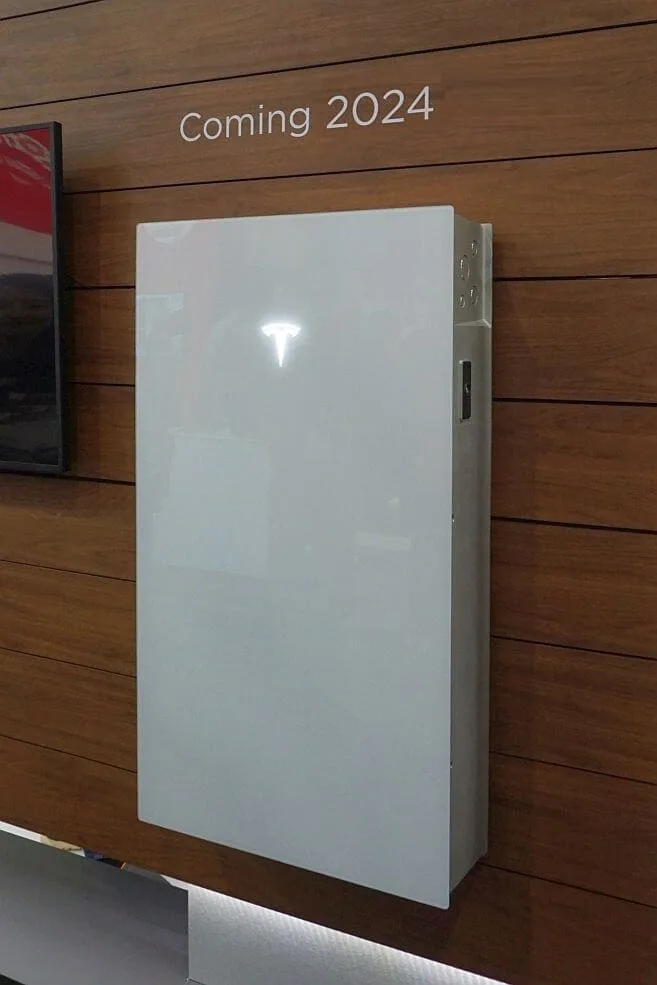
Integrated hybrid inverter (e.g., Tesla Powerwall 3):
- Solar panels connect directly to the battery's built-in inverter
- Replaces your existing solar inverter
- Simpler wiring, fewer components
- Best for new solar installations or full system replacements
AC-coupled / battery-only (e.g., Enphase IQ Battery 5P):
- Battery has its own inverter but works alongside your existing solar inverter
- No need to replace current equipment
- Easier to add to existing solar systems
- Slightly lower round-trip efficiency (power converts AC to DC and back)
Plug-and-play / portable hybrid (e.g., EcoFlow DELTA Pro Ultra):
- Installs without a dedicated solar inverter
- Can work as both grid-tied backup and off-grid system
- Often easier permitting and DIY-friendly installation
- Good option for renters or homeowners who may move
According to Tesla's official specifications, the Powerwall 3 includes six integrated MPPT solar inputs handling up to 20 kW of solar, which eliminates the need for a separate string inverter entirely.
How Important Is Scalability?
Your energy needs will likely grow. EV purchases, home additions, or simply wanting more backup coverage all increase demand. Buying a scalable system now saves you from replacing everything later.
| System | Base Capacity | Max Capacity | Max Output |
|---|---|---|---|
| Tesla Powerwall 3 | 13.5 kWh | 54 kWh (4 units) | 46 kW |
| EcoFlow DELTA Pro Ultra | 6.1 kWh | 90 kWh (15 batteries) | 21.6 kW |
| Enphase IQ Battery 5P | 5.0 kWh | 80 kWh (16 units) | 61.4 kW |
| BLUETTI EP900 | 9.9 kWh | 39.6 kWh (4x B500) | 18 kW |
| Anker SOLIX X1 | 5.0 kWh | 180 kWh (6 stacks) | 36 kW |
The Enphase and Anker systems offer the most expansion room. The Anker SOLIX X1 scales to 180 kWh across six parallel stacks, which is enough for a small commercial installation. The Tesla Powerwall 3 caps at four units, but 54 kWh covers most residential needs.
Start with enough capacity for your current essentials, then confirm that your chosen system can grow when you need it to.
What About Installation and Permitting?
Installation is the hidden cost that catches many buyers off guard. Unlike portable power stations that work right out of the box, home batteries often require electrical permits, panel upgrades, and professional installation.
Typical installation factors:
- Electrical panel capacity: Older homes with 100A or 150A panels may need an upgrade to 200A ($1,500-$4,000)
- Permit requirements: Most jurisdictions require electrical permits for grid-tied battery installations
- Installer availability: Tesla-certified and Enphase-certified installers may have 4-8 week wait times
- Location: Batteries need a temperature-controlled or sheltered location (garage, exterior wall, utility room)
- Grid interconnection: Utility approval can take 2-6 weeks depending on your provider
Cost expectations:
- Battery hardware: $5,000-$15,000 per unit
- Installation labor: $2,000-$5,000
- Electrical panel upgrade (if needed): $1,500-$4,000
- Permits and interconnection: $200-$500
- Federal tax credit: 30% of total system cost (through 2032 under the Inflation Reduction Act)
The 30% federal tax credit significantly reduces effective cost. A $15,000 installed system nets to $10,500 after the credit.
Common Mistakes to Avoid
Undersizing your system. A single 5 kWh battery will not keep your AC running through a summer outage. Calculate your actual loads before purchasing.
Ignoring output power. A 20 kWh battery with 3 kW output cannot start a central air conditioner. Match output to your heaviest simultaneous loads.
Forgetting about transfer time. Some batteries take 10-20 milliseconds to switch from grid to battery power. Sensitive electronics and sump pumps need 0 ms (true UPS) transfer. The EcoFlow DELTA Pro Ultra offers 0 ms transfer, while most AC-coupled systems have a brief gap.
Skipping the load panel. Without a dedicated backup load panel, you either back up nothing or need an expensive full-panel transfer switch. Plan your critical circuits before installation.
Assuming solar is included. Most home batteries do not come with solar panels. Budget for panels separately if you want solar charging, or pair with an existing rooftop array.
Frequently Asked Questions
How long will a home battery power my house during an outage?
It depends on your battery capacity and household load. A 13.5 kWh Tesla Powerwall 3 powers essentials (fridge, lights, router, phone chargers drawing roughly 5-8 kWh/day) for about 1.5-2.5 days. With solar panels recharging the battery each day, you can run essentials indefinitely in sunny conditions. Whole-home backup without solar requires 25-40 kWh or more, depending on your usage.
Are home batteries worth the cost in 2026?
For homeowners with solar panels, time-of-use electricity rates, or frequent power outages, yes. The federal 30% tax credit brings a typical system cost from $12,000-$18,000 down to $8,400-$12,600. If you are on a time-of-use rate plan, storing cheap off-peak electricity and using it during peak hours can save $50-$150 per month. Payback periods range from 5-10 years depending on your utility rates and usage patterns.
Can I install a home battery myself?
Some systems, like the EcoFlow DELTA Pro Ultra, are designed for simpler installation and may not require a licensed electrician in all jurisdictions. However, most grid-tied systems (Tesla Powerwall, Enphase) require professional installation, electrical permits, and utility interconnection approval. Even "DIY-friendly" systems benefit from a licensed electrician's review for safety and code compliance.
What is the difference between a home battery and a portable power station?
Scale and integration. Home batteries store 5-90+ kWh (enough for a full household), connect to your electrical panel, and work with rooftop solar. Portable power stations typically store 0.5-4 kWh, plug into individual devices, and are designed to move. Some products, like the EcoFlow DELTA Pro Ultra, blur this line by offering both home integration and portability. See our home backup power station guide for options that bridge both categories.
How long do home batteries last before needing replacement?
Modern LFP home batteries are rated for 4,000-10,000 cycles. With one full cycle per day, that translates to 10-25+ years of service before the battery degrades to 70-80% of original capacity. Most manufacturers offer 10-year warranties (Enphase offers 15 years). The battery will not stop working after its rated cycles; it simply holds less charge, similar to an aging phone battery.
Last updated: March 6, 2026
As an affiliate, we earn from qualifying purchases. This does not affect our editorial independence.
Get Notified When Prices Drop
Join our newsletter for exclusive deal alerts, product comparisons, and energy-saving tips.
As an affiliate, we earn from qualifying purchases. This does not affect our editorial independence.
Related Articles
Best Home Battery Storage Systems in 2026: 5 Top Picks Compared
We compared the top 5 home battery systems for 2026. Our picks cover whole-home backup, solar integration, modular scaling, and budget-friendly options.
Tesla Powerwall 3 Review: Is It the Best Home Battery for 2026?
Full review of the Tesla Powerwall 3 home battery: 13.5 kWh LFP capacity, 11.5 kW output, integrated solar inverter with 6 MPPTs. Rating: 8.5/10.
Tesla Powerwall 3 vs EcoFlow DELTA Pro Ultra: Which Home Battery Is Right for You?
Tesla Powerwall 3 vs EcoFlow DELTA Pro Ultra compared on capacity, output, scalability, installation, and price. Find out which home battery fits your needs.