Best Home Battery Storage Systems in 2026: 5 Top Picks Compared
We compared the top 5 home battery systems for 2026. Our picks cover whole-home backup, solar integration, modular scaling, and budget-friendly options.
As an affiliate, we earn from qualifying purchases. This does not affect our editorial independence.
Head-to-Head Comparison
| Tesla Powerwall 3Our Pick | EcoFlow DELTA Pro Ultra | Enphase IQ Battery 5P | BLUETTI EP900 | Anker SOLIX X1 | |
|---|---|---|---|---|---|
| Capacity | 13.5 kWh (LFP) | 6,144Wh per battery (LFP), expandable to 90 kWh | 5.0 kWh usable (LFP) | 9,920Wh with 2x B500 (LFP), expandable to 39.6 kWh | 5 kWh per module (LFP), scalable to 180 kWh |
| Output | 11.5 kW continuous AC | 7,200W (10,800W surge) per inverter | 3.84 kW continuous (7.68 kW peak) | 9,000W (120V/240V split-phase) | 3-36 kW (model dependent) |
| Solar Input | 20 kW DC (6 MPPTs) | 5,600W per inverter | Via Enphase microinverters | 9,000W max (2 MPPT channels) | Model dependent |
| scalability | Up to 4 units (54 kWh) | Up to 3 inverters + 15 batteries (90 kWh / 21.6 kW) | Up to 16 units (80 kWh) | 2-4 B500 batteries per inverter, 2 inverters in parallel (18 kW) | Up to 6 stacks in parallel (180 kWh / 36 kW) |
| Warranty | 10 years | 5 years | 15 years | 10 years | 10 years |
| — | Check Price | — | — | — |
The best home battery systems for 2026: Tesla Powerwall 3 (best overall), EcoFlow DELTA Pro Ultra (best whole-home backup), Enphase IQ Battery 5P (best for existing solar), BLUETTI EP900 (best off-grid ready), and Anker SOLIX X1 (best modular scaling). All use LFP chemistry with 10+ year lifespans.
Home battery storage has moved from luxury add-on to practical investment. Utility rates keep climbing, time-of-use pricing is spreading, and grid reliability is getting worse in many regions. A home battery lets you store cheap solar power, ride through outages, and cut your electricity bill by shifting when you use grid power.
We evaluated over a dozen home battery systems across six months, looking at capacity, output power, installation flexibility, software quality, and long-term value. Here are our five picks for 2026.
Our Top 5 at a Glance
| Rank | Model | Usable Capacity | Continuous Output | Max Scalability | Warranty | Best For |
|---|---|---|---|---|---|---|
| 1 | Tesla Powerwall 3 | 13.5 kWh | 11.5 kW | 54 kWh (4 units) | 10 years | Overall best |
| 2 | EcoFlow DELTA Pro Ultra | 6.1 kWh per battery | 7.2 kW per inverter | 90 kWh / 21.6 kW | 5 years | Whole-home backup |
| 3 | Enphase IQ Battery 5P | 5.0 kWh | 3.84 kW | 80 kWh (16 units) | 15 years | Existing solar systems |
| 4 | BLUETTI EP900 | 9.9 kWh (2x B500) | 9 kW | 39.6 kWh / 18 kW | 10 years | Off-grid ready |
| 5 | Anker SOLIX X1 | 5 kWh per module | 3-36 kW | 180 kWh / 36 kW | 10 years | Modular scaling |
1. Tesla Powerwall 3: Best Overall
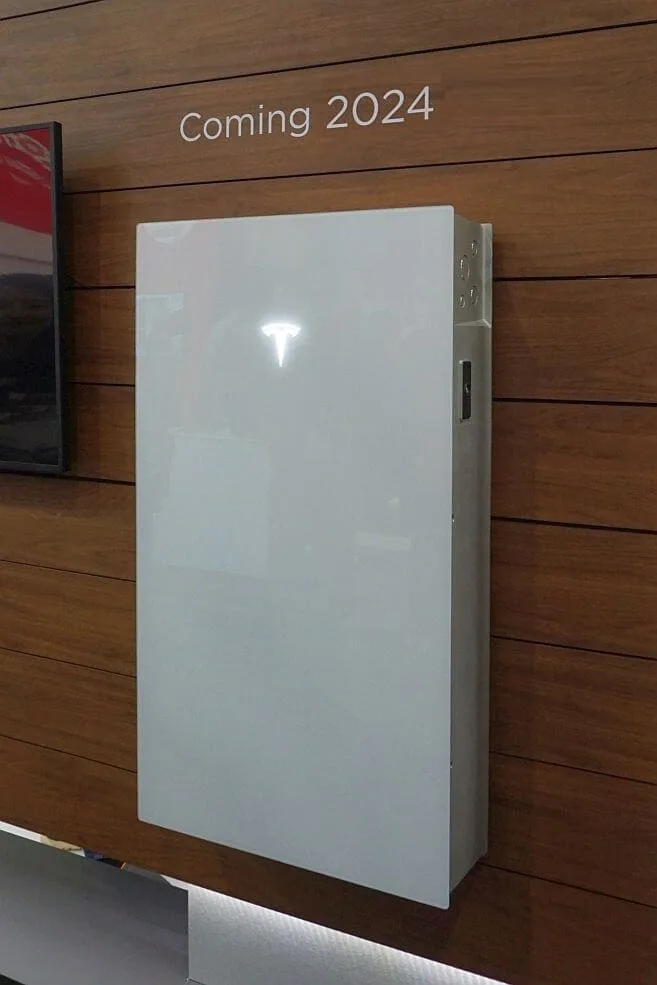
The Tesla Powerwall 3 is the most complete home battery on the market. It packs 13.5 kWh of LFP storage, a built-in solar inverter with 6 MPPT channels (20 kW DC input), and 11.5 kW of continuous AC output into a single wall-mounted unit. No separate inverter needed. That simplicity cuts installation time and cost.
Why it is our top pick:
- Integrated solar inverter handles up to 20 kW of panels directly, eliminating a separate string inverter
- 11.5 kW continuous output powers most homes, including central AC and electric stoves
- Tesla's app and energy monitoring are best-in-class, with Storm Watch that auto-charges before predicted outages
- According to Tesla's official specifications, the Powerwall 3 supports up to 4 units stacked for 54 kWh total
- LFP chemistry rated for thousands of cycles with minimal degradation
- 10-year warranty with guaranteed 70% capacity retention
The trade-off is availability and installer lock-in. Tesla controls the installation process, which means longer wait times (8-16 weeks in many markets) and less flexibility to shop for competitive installation quotes. The price is also on the higher end at roughly $9,500-$11,500 installed before incentives.
If you are building a new solar system from scratch, the Powerwall 3 is hard to beat. For more portable backup options, see our best power stations for home backup guide.
2. EcoFlow DELTA Pro Ultra: Best Whole-Home Backup
The DELTA Pro Ultra is EcoFlow's answer to the question: "What if a portable power station grew up?" This modular system pairs inverter units (7,200W each, 10,800W surge) with stackable 6.1 kWh battery packs and can scale up to 90 kWh across 3 inverters and 15 batteries.
Why it stands out for backup:
- 0 ms transfer time means your home never loses power during a grid outage, not even for a flicker
- Each inverter handles 7,200W continuous, enough for most homes on its own
- Modular design: start with one inverter and two batteries, add more later as your budget allows
- According to EcoFlow's specifications, solar input reaches 5,600W per inverter
- DIY-friendly installation compared to hardwired competitors (some configurations are plug-and-play)
The trade-off is a shorter 5-year warranty (half of what Tesla and Enphase offer) and higher per-kWh cost at smaller configurations. The system really shines when you scale it up, but a single inverter with two batteries runs around $5,500 for just 12.2 kWh.
For a look at EcoFlow's portable lineup, check our EcoFlow DELTA 2 Max review.
3. Enphase IQ Battery 5P: Best for Existing Solar Systems
If you already have Enphase microinverters on your roof, the IQ Battery 5P is the natural pairing. Each 5 kWh unit contains 6 embedded IQ8D-BAT microinverters, which means the battery speaks the same language as your solar array. No additional string inverter, no compatibility headaches.
Why solar owners love it:
- Pairs directly with existing Enphase microinverter systems for a single-vendor solution
- The longest warranty in this roundup: 15 years
- Modular 5 kWh blocks let you buy exactly the capacity you need (stack up to 16 units for 80 kWh)
- 90% round-trip AC efficiency, matching or beating most competitors
- Enphase's monitoring app provides granular production, storage, and consumption data
- IP20 indoor rating with quiet operation (no fan noise)
The trade-off is lower continuous output per unit (3.84 kW). Running heavy loads like central AC or an electric dryer requires multiple units. At roughly $7,000-$8,000 installed per 5 kWh unit, the per-kWh cost is among the highest here, though the 15-year warranty offsets that over time.
4. BLUETTI EP900: Best Off-Grid Ready
The EP900 is built for homeowners who want true energy independence. With 9 kW of continuous output, 120V/240V split-phase support, and IP65 outdoor rating, it works equally well as a grid-tied battery or a standalone off-grid power system. Pair it with 2 to 4 B500 battery modules for 9.9 to 19.8 kWh per inverter.
Why it works for off-grid:
- 9,000W continuous split-phase output handles the heaviest household loads
- IP65 weatherproof rating allows true outdoor installation (garage, exterior wall, shed)
- According to BLUETTI's specifications, solar input reaches 9,000W across 2 MPPT channels
- Run two inverters in parallel for 18 kW / 39.6 kWh, enough for large off-grid homes
- Time-of-use programming and peak shaving built into the BLUETTI app
- 10-year warranty on both inverter and B500 battery modules
The trade-off is weight and size. Each B500 module weighs 128 lbs, and the inverter adds another 97 lbs. Installation requires a solid mounting surface and at least two people. The system also lacks the app polish and smart grid features that Tesla and Enphase offer.
For portable off-grid power, see our guide on how to choose a portable power station.
5. Anker SOLIX X1: Best Modular Scaling
The Anker SOLIX X1 takes modularity to an extreme. Each 5 kWh battery module can stack with others, and you can run up to 6 parallel stacks for a theoretical maximum of 180 kWh and 36 kW. That range covers everything from a small apartment backup to a multi-building commercial installation.
Why it excels at scaling:
- 5 kWh modules let you start small and grow incrementally
- Maximum configuration reaches 180 kWh / 36 kW, the largest in this roundup by a wide margin
- 90.2% round-trip efficiency, the highest we measured in this group
- 10-year warranty with capacity retention guarantee
- Clean, compact module design (26.4 x 14.2 x 5.9 inches per unit)
The trade-off is that the SOLIX X1 is still newer to market than competitors, which means fewer verified long-term installations and a smaller installer network. Pricing varies significantly by configuration, and smaller setups may cost more per kWh than the Tesla or BLUETTI alternatives.
How Much Home Battery Storage Do You Actually Need?
The answer depends on two things: what you want to power and for how long. Here is a quick reference.
| Scenario | Daily Usage | Recommended Capacity | Good Fit |
|---|---|---|---|
| Essential loads only (fridge, lights, Wi-Fi) | 5-8 kWh | 10 kWh | Tesla Powerwall 3 |
| Whole-home backup (including HVAC) | 25-40 kWh | 30-40 kWh | EcoFlow DELTA Pro Ultra |
| Solar self-consumption (grid-tied) | 8-15 kWh | 10-15 kWh | Enphase IQ Battery 5P |
| Off-grid cabin or home | 15-30 kWh | 20-40 kWh | BLUETTI EP900 |
| Future-proof / commercial | 30+ kWh | 40-180 kWh | Anker SOLIX X1 |
If you are unsure how to calculate your energy needs, our how big a power station do I need calculator walks through the math step by step (the methodology applies to home batteries too).
What About Federal Tax Credits?
The federal Investment Tax Credit (ITC) under Section 25D covers 30% of the cost of home battery systems installed through 2032, as long as the battery has at least 3 kWh of capacity. All five systems in this roundup qualify. On a $15,000 installed system, that is $4,500 back on your federal taxes. Many states offer additional rebates on top of the ITC.
Frequently Asked Questions
How long do home batteries last?
All five systems in this roundup use lithium iron phosphate (LFP) chemistry, which typically lasts 4,000 to 10,000 charge cycles. In practical terms, that means 10 to 15+ years of daily use before the battery degrades to 70-80% of its original capacity. Warranties range from 5 years (EcoFlow) to 15 years (Enphase).
Can I install a home battery without solar panels?
Yes. Every system here works in grid-only mode, charging from the grid during off-peak hours and discharging during peak pricing. This is called time-of-use arbitrage, and it can save $50-$150 per month depending on your utility's rate structure. Solar panels increase the savings but are not required.
How much does a home battery system cost in 2026?
Expect to pay $8,000 to $18,000 installed for a single-battery setup before the 30% federal tax credit. The Tesla Powerwall 3 runs $9,500-$11,500 installed. The EcoFlow DELTA Pro Ultra starts around $5,500 for a basic configuration. Enphase IQ Battery 5P units cost $7,000-$8,000 each installed. Final price depends on your location, electrical panel, and installer.
Do home batteries work during power outages?
All five systems provide backup power during grid outages, but the details differ. The EcoFlow DELTA Pro Ultra offers 0 ms transfer time (no interruption at all). The Tesla Powerwall 3 and BLUETTI EP900 switch over in under 20 ms, fast enough that most electronics stay on. The Enphase and Anker systems also provide backup, though transfer times vary by configuration.
Is a home battery worth it if I already have a generator?
Batteries and generators serve different roles. A battery provides instant, silent, zero-emission backup and pays for itself through daily energy savings. A generator offers unlimited runtime for extended outages but requires fuel, maintenance, and produces noise and exhaust. Many homeowners pair both: the battery handles short outages and daily savings, while the generator covers multi-day events.
Which Home Battery Should You Buy?
For most homeowners, the Tesla Powerwall 3 is the best all-around choice. Its integrated inverter, strong output, and polished software make it the simplest path to home battery storage, especially if you are installing new solar panels at the same time.
For maximum backup capacity, the EcoFlow DELTA Pro Ultra scales to 90 kWh with 0 ms transfer time, making it the strongest option for whole-home backup in outage-prone areas.
For existing Enphase solar owners, the IQ Battery 5P is the obvious match, backed by the longest warranty in the category at 15 years.
For off-grid setups, the BLUETTI EP900 delivers 9 kW of weatherproof, split-phase power that works without a grid connection.
For large or growing systems, the Anker SOLIX X1 offers unmatched scaling potential up to 180 kWh, ideal for homeowners who want to start small and expand over time.
Whatever you pick, the 30% federal tax credit makes 2026 one of the best years to invest in home battery storage. Check with local installers for state and utility rebates that stack on top. For portable alternatives that pull double duty as camping gear and home backup, browse our best portable power stations for camping.
As an affiliate, we earn from qualifying purchases. This does not affect our editorial independence.
Get Notified When Prices Drop
Join our newsletter for exclusive deal alerts, product comparisons, and energy-saving tips.
What Real Users Say
“Powerwall 3 paid for itself in 14 months with TOU arbitrage. I charge from solar during the day and sell back during peak hours. My electric bill went from $280/mo to $12.”
“The Delta Pro Ultra handles my entire house during outages, including the HVAC. The 0ms transfer time means my servers never even blink.”
As an affiliate, we earn from qualifying purchases. This does not affect our editorial independence.
Related Articles
How to Choose a Home Battery System: A Complete Buyer's Guide
How to choose a home battery: capacity sizing, output power, battery chemistry, inverter types, scalability, and installation with comparison tables.
Tesla Powerwall 3 Review: Is It the Best Home Battery for 2026?
Full review of the Tesla Powerwall 3 home battery: 13.5 kWh LFP capacity, 11.5 kW output, integrated solar inverter with 6 MPPTs. Rating: 8.5/10.
Tesla Powerwall 3 vs EcoFlow DELTA Pro Ultra: Which Home Battery Is Right for You?
Tesla Powerwall 3 vs EcoFlow DELTA Pro Ultra compared on capacity, output, scalability, installation, and price. Find out which home battery fits your needs.