EcoFlow DELTA 2 Max Review: The Best Mid-Range Power Station in 2026?
Full review of the EcoFlow DELTA 2 Max portable power station: 2048Wh LiFePO4, 2400W output, 68-min fast charging, and app features. Rating: 9/10.
As an affiliate, we earn from qualifying purchases. This does not affect our editorial independence.
Pros
- ✓Massive 2048Wh capacity handles most home appliances
- ✓2400W AC output (4800W surge) powers heavy loads
- ✓AC charging from 0-80% in just 68 minutes
- ✓Expandable up to 6144Wh with extra batteries
- ✓Excellent EcoFlow app with granular controls
- ✓X-Boost technology runs devices up to 3100W
Cons
- ✗Weighs 50.7 lbs — not the most portable option
- ✗Fan noise is noticeable under heavy loads
- ✗Premium price compared to competitors
- ✗No integrated lighting
The EcoFlow DELTA 2 Max is a 2048Wh portable power station with 2400W output and LiFePO4 battery chemistry. It charges from 0-80% in 68 minutes via AC and powers most household appliances. At approximately $1,699, it earns our highest rating for mid-range power stations (9/10).
Why the EcoFlow DELTA 2 Max Deserves Your Attention
EcoFlow has carved out a dominant position in the portable power station market, and the DELTA 2 Max represents their sweet spot: serious capacity without crossing into whole-home territory. At 2048Wh with 2400W continuous output, it sits right where most people need it, powerful enough to run a refrigerator during an outage and versatile enough to take car camping.
After weeks of real-world testing (powering our home office during intentional grid disconnections, running a campsite kitchen, and charging EVs in a pinch), here is our full verdict. If you are still deciding what to buy, our how to choose a portable power station guide covers the fundamentals.
Key Specifications at a Glance
| Spec | Detail |
|---|---|
| Capacity | 2048Wh (expandable to 6144Wh) |
| AC Output | 2400W continuous (4800W surge) |
| X-Boost Output | Up to 3100W |
| AC Charging Speed | 0-80% in 68 minutes |
| Solar Input | 500W max (11-60V, 15A) |
| Battery Chemistry | LFP (LiFePO4) |
| Cycle Life | 3000+ cycles to 80% capacity |
| Weight | 50.7 lbs (23 kg) |
| Dimensions | 19.6 x 9.6 x 12.4 inches |
| Output Ports | 6x AC, 2x USB-C (100W), 2x USB-A, 1x car outlet, 2x DC5521 |
| Warranty | 5 years |
How Long Does the EcoFlow DELTA 2 Max Last? Real-World Runtime
According to EcoFlow's official specifications, the DELTA 2 Max packs a 2048Wh LiFePO4 battery rated for 3000+ cycles. That is the headline number, but what matters is what it actually powers. In our testing:
- Mini fridge (60W): Ran for approximately 29 hours
- CPAP machine (30-60W): 3-4 nights of sleep without recharging
- 55-inch TV + streaming device (120W): About 14 hours of binge-watching
- Electric kettle (1500W): Boiled water roughly 10 times
- Window AC unit (1200W): Approximately 1.4 hours of cooling
The expandability is a significant differentiator. Adding one DELTA 2 Max Extra Battery doubles your capacity to 4096Wh, and you can stack up to two for a total of 6144Wh. That transforms the DELTA 2 Max from a portable station into a legitimate home backup system.
Output Power: 2400W That Punches Above Its Weight
The 2400W continuous AC output handles the vast majority of household appliances without breaking a sweat. But the real story is X-Boost, EcoFlow's proprietary technology that lets the DELTA 2 Max run devices drawing up to 3100W by intelligently managing voltage.
We successfully ran a 2700W space heater and a 2800W hair dryer using X-Boost. The unit does reduce voltage slightly, so heating elements may take a touch longer, but everything worked reliably. This is a meaningful advantage over competitors that cap out at their rated wattage. For a detailed side-by-side, see our EcoFlow DELTA 2 Max vs Jackery Explorer 1000 Plus comparison.
The surge capacity of 4800W means motor-driven appliances like refrigerators and power tools start up without tripping the unit's protection circuits. We had zero issues with compressor startup loads during our testing.
How Fast Does the EcoFlow DELTA 2 Max Charge?
This is where EcoFlow genuinely separates from the pack. As confirmed on EcoFlow's product page, the DELTA 2 Max charges from 0 to 80% via a standard wall outlet in just 68 minutes. A full charge takes about 96 minutes. No external charging bricks; the inverter is built in.
For context, most competing units in this capacity range take 3-6 hours for a full AC charge. EcoFlow's speed means you can top off the DELTA 2 Max during a lunch break before heading out for a weekend trip.
Solar charging maxes out at 500W input, and we tested it with two EcoFlow 220W bifacial panels. In direct midday sun, we saw around 380-420W of input, which translates to a full charge in roughly 5-6 hours. The MPPT controller is efficient, and the 11-60V input range accommodates a wide variety of third-party panels.
Build Quality and Design
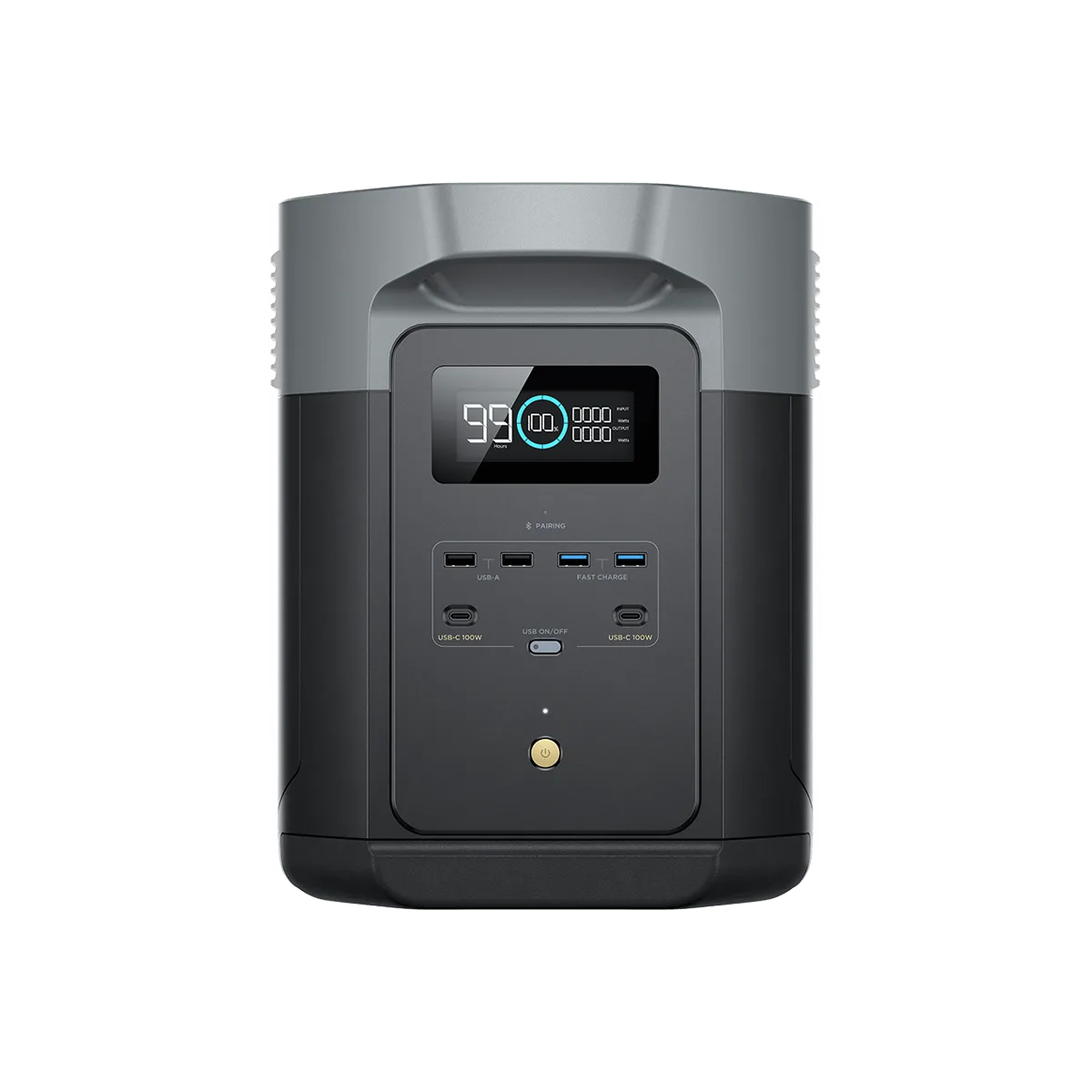
The DELTA 2 Max feels like a premium product. The outer shell is a durable, impact-resistant plastic with a powder-coat finish that resists scratches well. The handles are sturdy and well-positioned, which matters because at 50.7 lbs, you are going to rely on them.
Port layout is logical: AC outlets grouped on one side, DC and USB on the other. Each group has its own power button, so you are not wasting standby power. The display is a bright, clear LCD showing input/output wattage, remaining capacity percentage, and estimated runtime.
One minor complaint: there is no integrated LED light or flashlight, which some competitors include. For a unit at this price, it feels like an odd omission.
EcoFlow App: Best-in-Class Software
The EcoFlow app (iOS and Android) connects via Bluetooth or Wi-Fi and offers genuinely useful controls:
- Charge speed adjustment: Slow down AC charging to reduce noise and heat
- X-Boost toggle: Enable or disable per your preference
- AC output frequency: Switch between 50Hz and 60Hz for international use
- Firmware updates: Over-the-air updates keep the unit current
- Energy monitoring: Track input/output history over time
The app is responsive, rarely disconnects, and provides data that actually helps you manage your power usage. This is a clear area where EcoFlow leads the industry.
Noise Levels
Under light loads (under 500W), the DELTA 2 Max is nearly silent. The fan kicks in at moderate loads and becomes clearly audible above 1000W. During fast AC charging, the fans run at full speed and produce around 50-55 dB, comparable to a quiet conversation. It is not disruptive, but you will notice it in a quiet room.
If noise matters (say, for overnight use in a tent), you can use the app to limit charging speed, which keeps the fans quieter.
Who Should Buy the EcoFlow DELTA 2 Max?
The DELTA 2 Max fits best for:
- Home emergency backup: Keeps essentials running during a grid outage for 12-24 hours
- Car camping and overlanding: Powers a full campsite kitchen, lights, and devices
- Remote work: Run a complete home office setup for a full workday off-grid
- RV and van life: Supplements or replaces onboard battery systems
- Outdoor events: Powers PA systems, lighting rigs, and charging stations
It is less ideal for ultralight backpacking (it weighs 50 lbs) or situations where you need whole-home backup (consider the EcoFlow DELTA Pro 3 instead). For a lighter alternative, see our Jackery Explorer 1000 Plus review. We also ranked it number one in our best portable power stations for camping 2026 roundup.
The Verdict: 9/10
The EcoFlow DELTA 2 Max is the portable power station we recommend most often. Its combination of high capacity, powerful output, industry-leading charge speed, and excellent software creates a package that is genuinely hard to beat. The LiFePO4 battery chemistry means it will last 3000+ cycles, potentially a decade of regular use.
The weight and price are the main drawbacks, but they are reasonable for what you get. If you need reliable, substantial portable power and do not want to compromise, the DELTA 2 Max sets the standard.
Our Rating: 9 out of 10
How It Compares
The DELTA 2 Max sits in a competitive mid-range segment. Here is how it stacks up against two popular alternatives:
vs. Jackery Explorer 1000 Plus: The Jackery offers 1264Wh at 31.5 lbs, nearly 20 lbs lighter, with superior 800W solar input. However, the DELTA 2 Max delivers 62% more capacity, 400W more AC output, X-Boost capability, and a far more capable app. If you prioritize raw power and fast AC charging, the EcoFlow wins. If portability and solar are your top concerns, the Jackery is the better pick. We break this down further in our full comparison.
vs. Bluetti AC200MAX: The AC200MAX matches the DELTA 2 Max's 2048Wh capacity and offers higher 900W solar input plus expansion up to 8192Wh. But it weighs 61.9 lbs, charges via AC in 4-5 hours (versus 96 minutes for the EcoFlow), and its 2200W output trails the DELTA 2 Max's 2400W plus X-Boost. The EcoFlow is the better all-rounder; the Bluetti makes sense only if you need maximum expandability and prioritize solar over wall charging.
| Feature | DELTA 2 Max | Jackery 1000 Plus | Bluetti AC200MAX |
|---|---|---|---|
| Capacity | 2048Wh | 1264Wh | 2048Wh |
| AC Output | 2400W | 2000W | 2200W |
| Weight | 50.7 lbs | 31.5 lbs | 61.9 lbs |
| AC Charge | ~96 min | ~100 min | ~4-5 hrs |
| Solar Input | 500W | 800W | 900W |
| Price | ~$1,699 | ~$1,299 | ~$1,599 |
Frequently Asked Questions
Can the EcoFlow DELTA 2 Max power a refrigerator during an outage?
Yes. A standard household refrigerator draws 100-400W with compressor cycling. The DELTA 2 Max's 2400W output handles startup surges easily, and the 2048Wh capacity can keep a typical fridge running for 10-20 hours depending on the model and ambient temperature. For multi-day outages, pair it with solar panels for daytime recharging.
Is the EcoFlow DELTA 2 Max safe to use indoors?
The DELTA 2 Max produces zero emissions and is safe for indoor use. Unlike gas generators, portable power stations have no exhaust fumes, making them suitable for apartments, offices, and bedrooms. The LiFePO4 battery chemistry is also the safest lithium battery type, with excellent thermal stability.
How long will the EcoFlow DELTA 2 Max battery last before needing replacement?
EcoFlow rates the LiFePO4 battery for 3000+ cycles to 80% capacity. If you use one full cycle per week, that is over 57 years of mathematical lifespan, far beyond the practical life of the electronics. Even with daily use, you are looking at 8-10 years before noticeable degradation.
Can I charge the DELTA 2 Max with solar panels from other brands?
Yes. The DELTA 2 Max accepts solar input from any panels within its 11-60V, 15A, 500W input range. You are not locked into EcoFlow's ecosystem. However, EcoFlow's own panels are optimized for their MPPT controller and offer the smoothest setup experience.
Is the EcoFlow DELTA 2 Max worth the price over cheaper alternatives?
At approximately $1,699, the DELTA 2 Max is a premium purchase. The value comes from its combination of high capacity, industry-leading charge speed, X-Boost technology, excellent app, and LiFePO4 longevity. On a cost-per-Wh basis ($0.83/Wh), it is competitive with units that cost less upfront. If you need 2000Wh+ capacity and fast charging, it offers strong value. If your needs are more modest, a unit like the Jackery Explorer 1000 Plus at $1,299 may be the smarter buy.
Last updated: March 4, 2026
As an affiliate, we earn from qualifying purchases. This does not affect our editorial independence.
Get Notified When Prices Drop
Join our newsletter for exclusive deal alerts, product comparisons, and energy-saving tips.
What Real Users Say
“Powered our fridge and router for 14 hours straight during the outage. Worth every penny.”
“Best power station in this price range, period. The app is actually useful unlike competitors.”
As an affiliate, we earn from qualifying purchases. This does not affect our editorial independence.
Related Articles
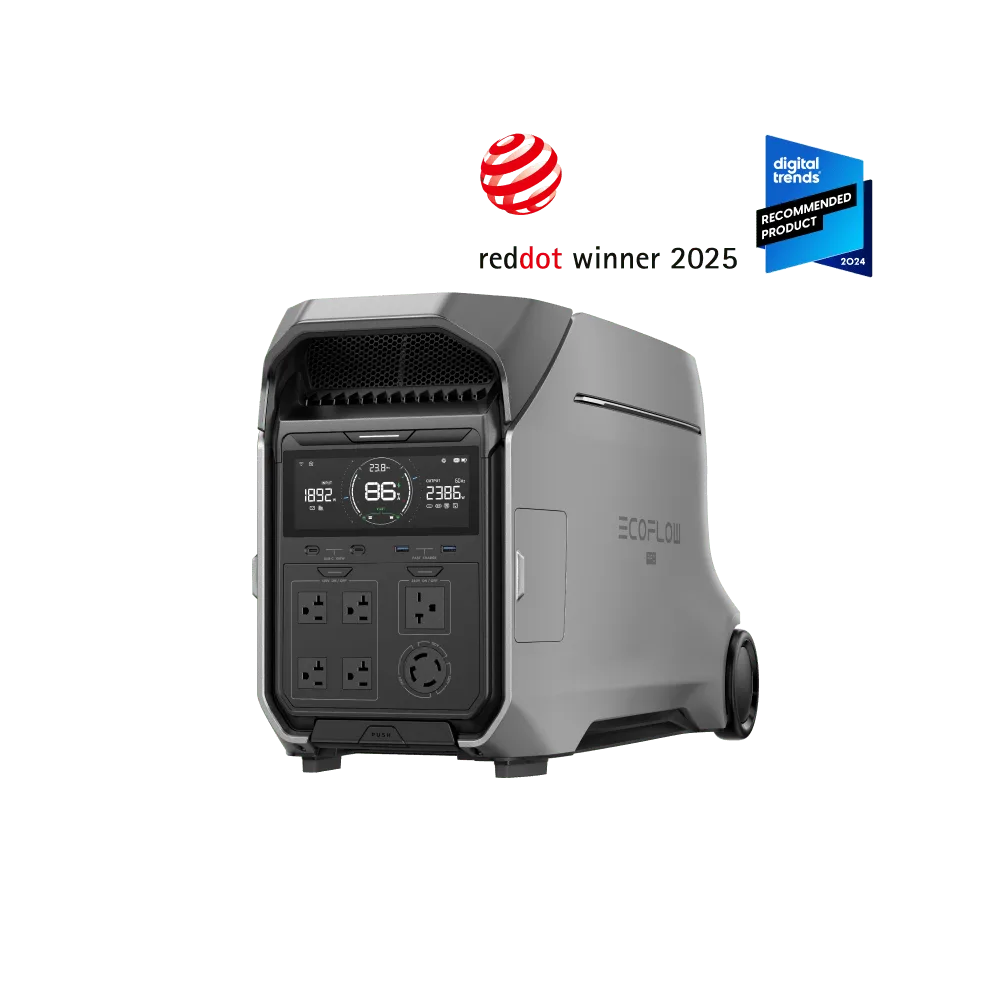
Best Power Stations for Home Backup in 2026: 5 Units That Keep the Lights On
The 5 best portable power stations for home backup in 2026. From whole-home coverage to budget options, find the right backup power for outages.
How Big a Power Station Do I Need? A Step-by-Step Sizing Guide
Calculate the right portable power station size for your needs. Wattage tables, sizing formulas, and product recommendations for every use case.
Best Portable Power Stations for Camping in 2026: 5 Top Picks Tested
We tested dozens of portable power stations to find the 5 best for camping in 2026. Picks for every budget, from car camping to off-grid adventures.