Jackery Explorer 1000 Plus Review: A Reliable LiFePO4 Workhorse
Jackery Explorer 1000 Plus review: 1264Wh LiFePO4, 2000W output, 800W solar input. We test solar charging, portability, and performance. Rating: 8/10.
As an affiliate, we earn from qualifying purchases. This does not affect our editorial independence.
Pros
- ✓LiFePO4 battery rated for 4000 cycles — exceptional longevity
- ✓Relatively compact and lighter than many competitors at 31.5 lbs
- ✓Clean 2000W pure sine wave output
- ✓Excellent solar charging performance with Jackery SolarSaga panels
- ✓ChargeShield technology protects battery health
- ✓Expandable with add-on battery pack up to 2528Wh
Cons
- ✗Slower AC charging than EcoFlow competitors (about 100 minutes to full)
- ✗USB-C output maxes at 100W (single port)
- ✗App functionality is more basic than EcoFlow's
- ✗Only 3 AC outlets
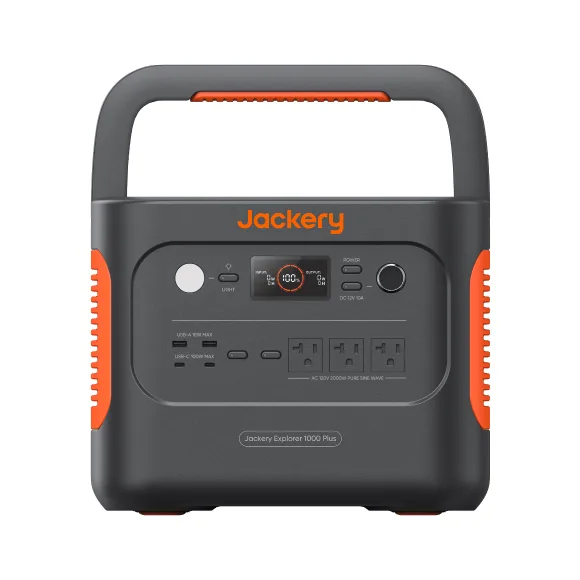
The Jackery Explorer 1000 Plus is a 1264Wh LiFePO4 portable power station with 2000W output and industry-leading 800W solar input. At 31.5 lbs and approximately $1,299, it delivers excellent solar charging performance and genuine portability (8/10).
Jackery Gets Serious with LiFePO4
Jackery was one of the first brands to bring portable power stations to the mainstream, but for years they stuck with standard lithium-ion cells while competitors moved to LiFePO4. The Explorer 1000 Plus marked a turning point: Jackery's first LiFePO4 model in the mid-range segment, and it shows a company that has been paying attention.
With 1264Wh of capacity, 2000W of continuous AC output, and a battery rated for 4000 cycles, the Explorer 1000 Plus targets the practical sweet spot: enough power for weekend camping trips, tailgating, or keeping critical devices running during short outages, all in a package you can actually carry.
We spent three weeks testing it across camping trips, home backup scenarios, and daily use. If you are still researching, our how to choose a portable power station guide covers all the key factors. Here is what we found.
What is in the Box
Jackery keeps things straightforward. You get the Explorer 1000 Plus unit, an AC charging cable, a car charging cable, a user manual, and a warranty card. Solar panels are sold separately; Jackery's SolarSaga 100W and 200W panels are the recommended pairing.
No carrying case is included, which is a minor miss given the unit's portability focus. Aftermarket cases are available from third parties.
How Long Does the Jackery Explorer 1000 Plus Battery Last?
According to Jackery's official product page, the 1264Wh LiFePO4 battery is the foundation of the Explorer 1000 Plus, and it is the primary reason to consider this unit over older Jackery models. LiFePO4 chemistry offers three major advantages over the standard lithium-ion cells in the original Explorer 1000:
- Longevity: 4000 cycles to 70% capacity, versus roughly 500-800 for Li-ion. At one cycle per day, that is over 10 years of use.
- Safety: LiFePO4 is more thermally stable and far less prone to thermal runaway.
- Temperature tolerance: Better performance in both hot and cold conditions.
The 1264Wh capacity translates to real-world runtimes like these:
- Smartphone (15Wh): Approximately 70 full charges
- Laptop (60Wh): About 17 full charges
- Portable projector (100W): Roughly 10 hours of movie nights
- Electric blanket (80W): Around 13 hours of warmth
- Pellet grill (300W average): About 3.5 hours of smoking
You can also expand to 2528Wh by adding a Jackery Battery Pack 1000 Plus, which connects via a cable on the unit's side. This effectively doubles your runtime without buying an entirely new system.
Power Output
The Explorer 1000 Plus delivers 2000W of continuous pure sine wave AC power, with surge handling up to 4000W for motor-driven appliances. Three AC outlets (standard NEMA 5-15) are grouped on the front panel.
In our testing, the unit powered the following without issues:
- A 1500W space heater ran continuously for about 40 minutes
- A full-size blender (peak draw around 1200W) crushed ice without triggering any protection
- A 700W microwave heated meals reliably
For USB, you get one USB-C port at 100W and two USB-A ports at 18W each. The single USB-C port is a limitation if you are charging multiple modern laptops or tablets, as competitors like the EcoFlow DELTA 2 Max offer two 100W USB-C ports. A 12V car outlet rounds out the DC options.
How Good Is the Jackery Explorer 1000 Plus for Solar Charging?
Jackery has always excelled at solar, and the Explorer 1000 Plus continues that tradition. As listed in Jackery's specifications, the unit accepts up to 800W of solar input, which is impressive for its size class.
We tested with two Jackery SolarSaga 200W panels, and in clear midday conditions, we consistently pulled 350-380W of solar input. A full charge from solar alone took approximately 4 hours in ideal conditions, enough to fully recharge during a day at camp.
The MPPT solar controller is efficient, and Jackery's panels are designed to pair smoothly with their stations. Setup takes about two minutes: unfold the panels, plug in the Anderson connectors, and you are generating power. The input voltage range of 11-60V supports most standard solar panel configurations.
For dedicated off-grid users, the 800W input ceiling means you can add more panels for faster charging, or maintain a trickle charge even on overcast days.
Portability: The Carrying Advantage
At 31.5 lbs (14.3 kg), the Explorer 1000 Plus is genuinely portable in a way that larger stations are not. The single top handle is comfortable for short carries, and the unit's compact dimensions (14.8 x 10.3 x 11.4 inches) let it fit into car trunks, RV storage compartments, and camping gear piles without hogging space.
This matters more than specs suggest. The difference between 31 lbs and 50 lbs is the difference between grabbing a unit with one hand and needing to plan its placement. For anyone who moves their power station frequently, between a car, campsite, and home, this weight advantage is tangible.
Charging Speed and ChargeShield
AC wall charging takes the Explorer 1000 Plus from 0 to full in about 100 minutes. That is reasonable but not exceptional; EcoFlow's comparable units charge about 30% faster. Jackery's ChargeShield technology manages charge rates to optimize battery health, which may contribute to the slightly slower speed but should pay dividends in long-term cycle life.
You can also charge via a car's 12V outlet at around 100W, which takes approximately 13 hours for a full charge. This is best used as a supplemental charging method during long drives rather than a primary strategy.
Simultaneous charging and discharging (pass-through) is supported, allowing you to use the unit as a UPS while plugged into the wall.
The Jackery App
The Jackery app connects via Bluetooth and provides basic monitoring: input/output wattage, battery percentage, and estimated remaining runtime. You can also toggle AC and DC output remotely and check firmware status.
Compared to EcoFlow's app, it is simpler. There are fewer granular settings: you cannot adjust charge speed, change output frequency, or view historical energy data. For many users, this simplicity is fine. But power users who want deep control will notice the gap.
Build and Design
Jackery's signature orange-and-black design is distinctive and practical. The bright color makes the unit easy to spot at a crowded campsite. Build quality is solid, with a textured plastic shell that handles bumps and scuffs well.
The front panel layout is clean: AC outlets on the left, USB and DC on the right, display in the center. The LCD screen shows the essential information clearly, though it is not as detailed as EcoFlow's display.
Jackery includes a built-in LED light on the front panel with three modes (steady, SOS, flashing), which is a small but useful feature for camping and emergencies.
Who is This For?
The Jackery Explorer 1000 Plus is ideal for:
- Weekend campers who want reliable power without the bulk
- Solar enthusiasts who prioritize off-grid charging capability
- Emergency preparedness for short-duration outages (12-24 hours of essentials)
- Tailgaters and outdoor event-goers who need a compact, easy-to-carry unit
- RV owners looking for supplemental portable power
If you need to power heavy-draw appliances (air conditioners, large power tools) for extended periods, you will want to step up to a larger capacity unit or add the expansion battery. See how this unit stacks up in our EcoFlow DELTA 2 Max vs Jackery Explorer 1000 Plus comparison, or check out our best portable power stations for camping 2026 roundup for more options.
The Verdict: 8/10
The Jackery Explorer 1000 Plus is a well-rounded portable power station that nails the fundamentals: reliable LiFePO4 power, excellent solar charging, genuine portability, and a build quality that inspires confidence. It does not try to be everything, and that focus is its strength.
The slower AC charging and basic app keep it a step behind the best in class, but for the many users who prioritize solar performance, longevity, and a carry-friendly form factor, the Explorer 1000 Plus is an excellent choice.
Our Rating: 8 out of 10
How It Compares
The Explorer 1000 Plus competes in a crowded mid-range segment. Here is how it measures up against two strong alternatives:
vs. EcoFlow DELTA 2 Max: The EcoFlow offers 62% more capacity (2048Wh vs 1264Wh), higher 2400W output with X-Boost up to 3100W, and charges via AC in just 96 minutes. However, it weighs 50.7 lbs versus the Jackery's 31.5 lbs, costs $400 more, and its 500W solar input trails the Jackery's 800W. Choose the EcoFlow for maximum power; choose the Jackery for portability and solar performance. We cover this matchup in depth in our full comparison.
vs. Anker SOLIX C1000: The Anker is even lighter at 26.8 lbs with ultra-fast 58-minute AC charging and a lower ~$999 price. But it offers only 1056Wh of capacity (16% less than the Jackery), 1800W output, and 600W solar input. The Jackery is the better choice for users who want more capacity and superior solar charging; the Anker wins on weight, AC charge speed, and price.
| Feature | Jackery 1000 Plus | EcoFlow DELTA 2 Max | Anker SOLIX C1000 |
|---|---|---|---|
| Capacity | 1264Wh | 2048Wh | 1056Wh |
| AC Output | 2000W | 2400W | 1800W |
| Weight | 31.5 lbs | 50.7 lbs | 26.8 lbs |
| AC Charge | ~100 min | ~96 min | ~58 min |
| Solar Input | 800W | 500W | 600W |
| Price | ~$1,299 | ~$1,699 | ~$999 |
Frequently Asked Questions
Can the Jackery Explorer 1000 Plus run a CPAP machine all night?
Yes. A typical CPAP machine draws 30-60W. With the Explorer 1000 Plus's 1264Wh capacity, you can expect 3-5 nights of use on a single charge depending on your pressure settings and whether you use a heated humidifier. This makes it one of the most popular power stations for CPAP users.
How many solar panels do I need for the Jackery Explorer 1000 Plus?
For optimal solar charging, two Jackery SolarSaga 200W panels are ideal, delivering 350-380W in direct sun and a full charge in about 4 hours. Two 100W panels work too but take roughly twice as long. The 800W input maximum means you can connect up to four 200W panels for even faster charging in less-than-ideal conditions.
Is the Jackery Explorer 1000 Plus waterproof?
No. Like most portable power stations, the Explorer 1000 Plus is not waterproof or water-resistant. Keep it sheltered from rain and moisture. When camping, place it under a canopy, in a tent vestibule, or in a ventilated vehicle. Jackery does not provide an IP rating for this unit.
How does ChargeShield technology work?
ChargeShield is Jackery's proprietary battery management system that monitors and adjusts charging voltage, current, and temperature in real time. It is designed to optimize long-term battery health by preventing overcharging, overheating, and rapid degradation. This technology contributes to the 4000-cycle lifespan rating.
Can I use the Jackery Explorer 1000 Plus as a home UPS?
The Explorer 1000 Plus supports pass-through charging, meaning it can charge and discharge simultaneously. This lets it function as a basic UPS: plug it into the wall and connect your essential devices. If the power goes out, the unit switches to battery power. However, there is a brief switchover delay, so it is not suitable for sensitive equipment like desktop computers with unsaved work.
Last updated: March 4, 2026
As an affiliate, we earn from qualifying purchases. This does not affect our editorial independence.
Get Notified When Prices Drop
Join our newsletter for exclusive deal alerts, product comparisons, and energy-saving tips.
What Real Users Say
“The Jackery Explorer 1000 Plus has been rock solid for our camping trips. Ran a mini fridge and charged all our devices for two days straight.”
“After comparing everything in the 1264Wh class, this one had the best balance of features and reliability.”
As an affiliate, we earn from qualifying purchases. This does not affect our editorial independence.
Related Articles
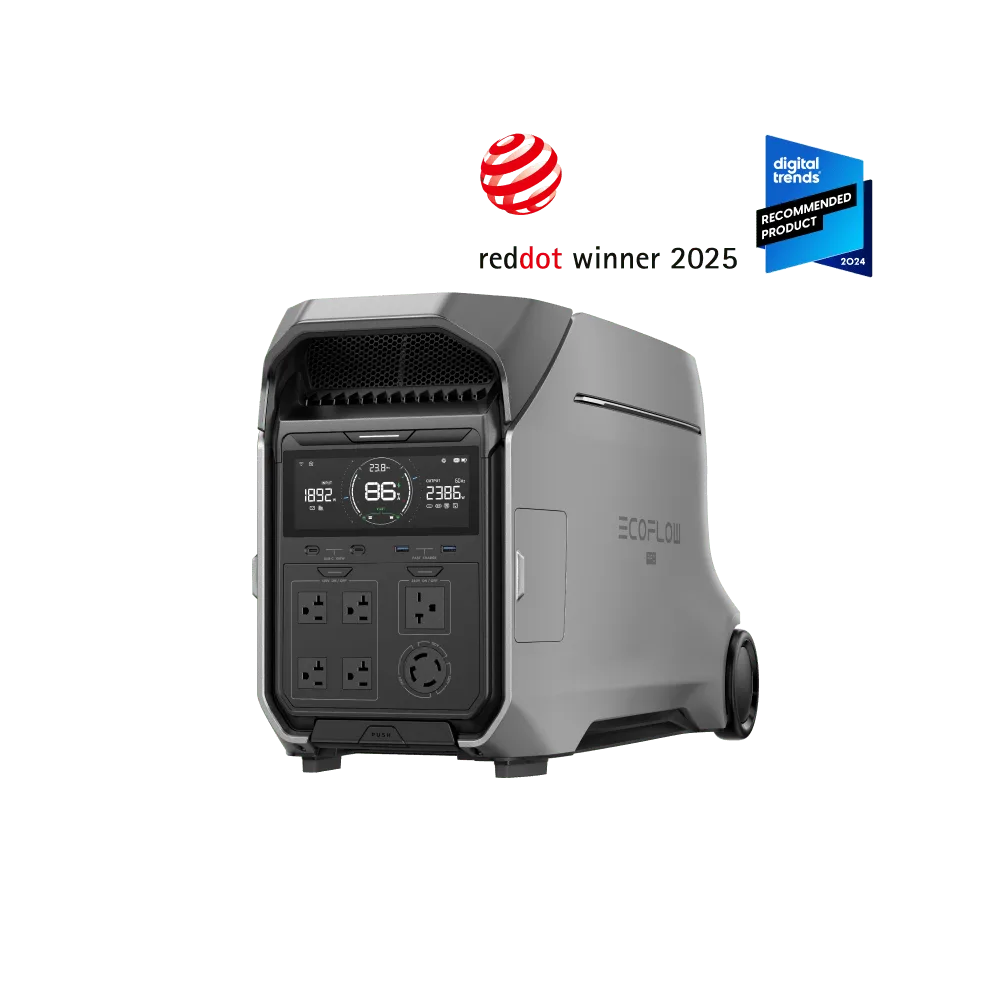
Best Power Stations for Home Backup in 2026: 5 Units That Keep the Lights On
The 5 best portable power stations for home backup in 2026. From whole-home coverage to budget options, find the right backup power for outages.
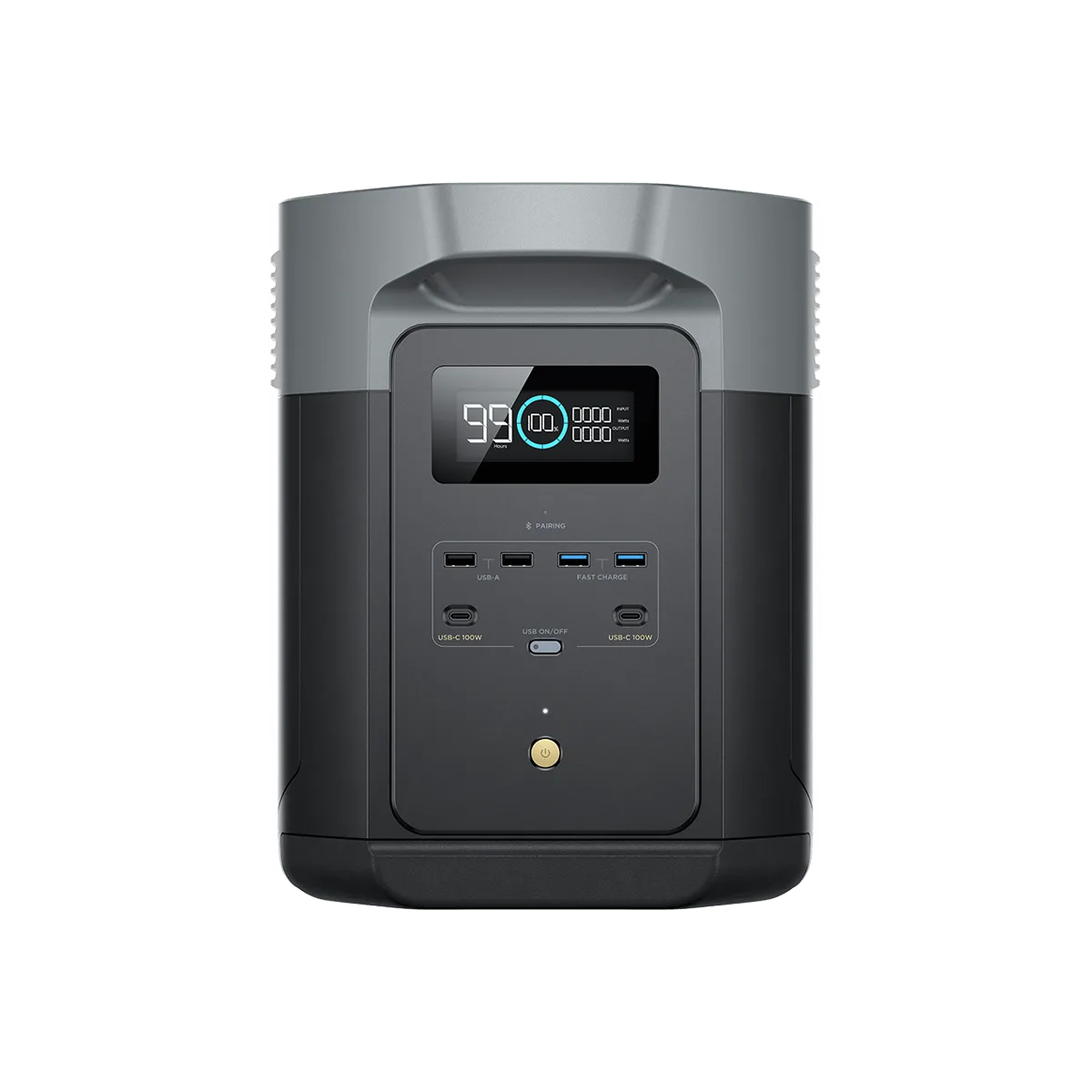
How Big a Power Station Do I Need? A Step-by-Step Sizing Guide
Calculate the right portable power station size for your needs. Wattage tables, sizing formulas, and product recommendations for every use case.
Best Portable Power Stations for Camping in 2026: 5 Top Picks Tested
We tested dozens of portable power stations to find the 5 best for camping in 2026. Picks for every budget, from car camping to off-grid adventures.