Best Portable Power Stations for Camping in 2026: 5 Top Picks Tested
We tested dozens of portable power stations to find the 5 best for camping in 2026. Picks for every budget, from car camping to off-grid adventures.
As an affiliate, we earn from qualifying purchases. This does not affect our editorial independence.
Our top 5 portable power stations for camping in 2026: EcoFlow DELTA 2 Max (best overall), Jackery Explorer 1000 Plus (best solar), Bluetti AC200MAX (best for groups), Anker SOLIX C1000 (best lightweight), and Goal Zero Yeti 1000X (most reliable). All tested in real camping conditions.
Camping with a portable power station has gone from luxury to standard practice. Whether you are running a 12V fridge, charging drones, or keeping a CPAP machine running through the night, having reliable off-grid power transforms the camping experience.
But the market is crowded. There are dozens of options across a wide price range, and the spec sheets can be overwhelming. We have tested over 20 portable power stations in real camping conditions: car camping in state parks, overlanding on forest roads, and multi-day trips where solar was our only recharge option.
Here are our five best picks for camping in 2026, each chosen for a specific strength. Not sure what specs to look for? Start with our complete buyer's guide.
Our Top 5 at a Glance
| Rank | Model | Capacity | Output | Weight | Best For |
|---|---|---|---|---|---|
| 1 | EcoFlow DELTA 2 Max | 2048Wh | 2400W | 50.7 lbs | Overall best |
| 2 | Jackery Explorer 1000 Plus | 1264Wh | 2000W | 31.5 lbs | Solar camping |
| 3 | Bluetti AC200MAX | 2048Wh | 2200W | 61.9 lbs | Basecamp / groups |
| 4 | Anker SOLIX C1000 | 1056Wh | 1800W | 26.8 lbs | Ultralight power |
| 5 | Goal Zero Yeti 1000X | 983Wh | 1500W | 31.7 lbs | Reliability / brand trust |
1. EcoFlow DELTA 2 Max: Best Overall for Camping
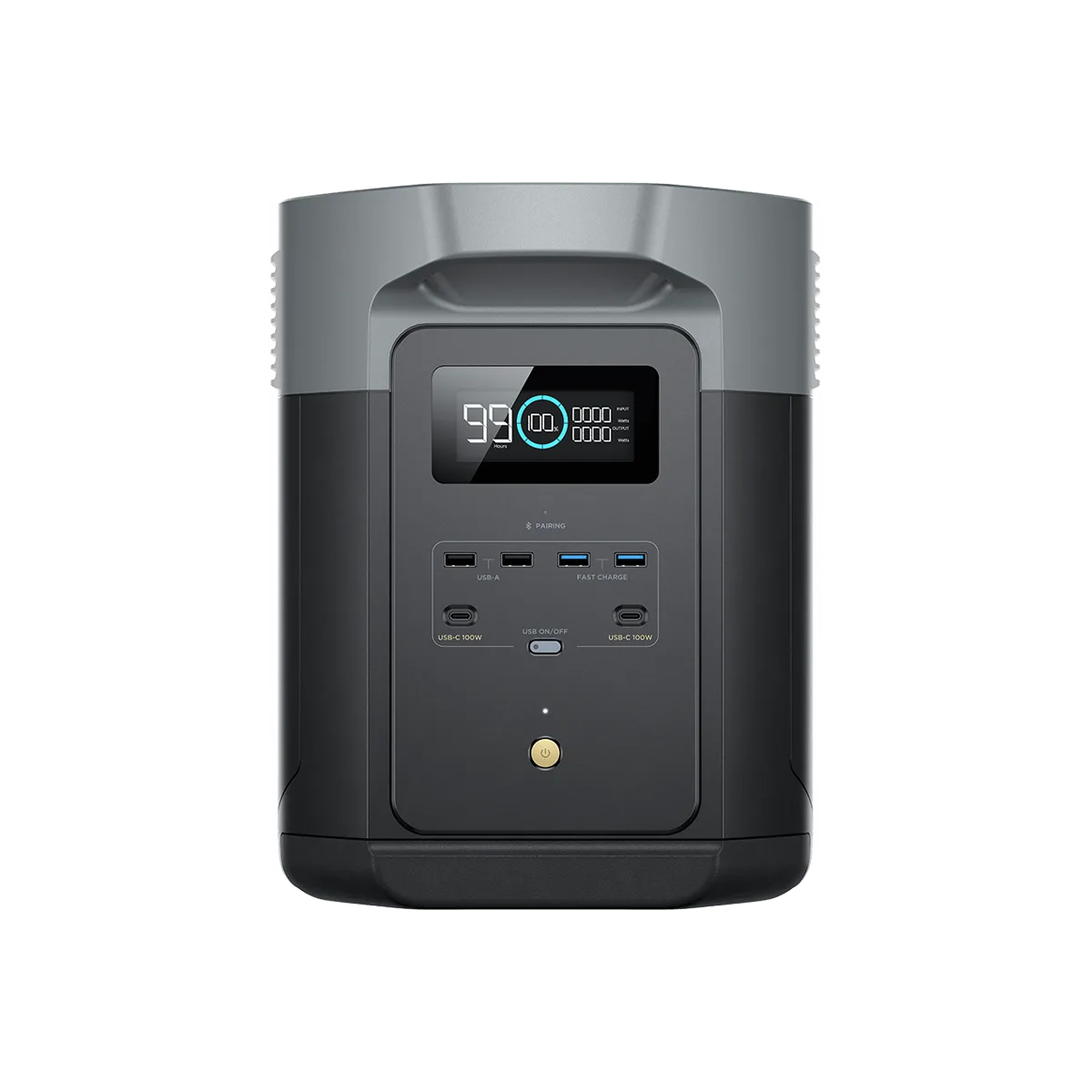
The EcoFlow DELTA 2 Max is our top overall pick because it delivers the best combination of capacity, output, and features in a single unit. According to EcoFlow's official specifications, its 2048Wh LiFePO4 battery provides enough power to run a campsite for an entire weekend without recharging, and the 2400W output (with X-Boost up to 3100W) means nothing in your camping setup will be too much for it.
Why it tops our list for camping:
- The 2048Wh capacity runs a 12V fridge, LED lights, phone chargers, and a laptop for 2-3 days straight
- Six AC outlets let your entire group charge and power devices simultaneously
- 0-80% AC charge in 68 minutes means you can top off quickly before leaving home
- 500W solar input recharges fully in about 5-6 hours with matched panels
- The EcoFlow app lets you monitor and adjust everything from your phone
The trade-off is weight. At 50.7 lbs, the DELTA 2 Max is not something you carry far from your vehicle. It is a car-camping and overlanding powerhouse, not a backpacking companion.
Price: Approximately $1,699
2. Jackery Explorer 1000 Plus: Best for Solar Camping
If your camping style leans heavily on solar, meaning extended trips where you cannot plug into a wall, the Jackery Explorer 1000 Plus is a standout. Its 800W solar input is the highest in this roundup relative to its capacity, meaning it recharges faster from the sun than any other unit here.
Why it excels at solar-powered camping:
- 800W max solar input can fully recharge the 1264Wh battery in approximately 4 hours under ideal conditions
- At 31.5 lbs, it is light enough to reposition as the sun moves
- Jackery's SolarSaga panels are designed to pair smoothly with their stations
- The LiFePO4 battery handles 4000 cycles, built for years of daily solar charge/discharge use
- Built-in LED light with SOS mode is genuinely useful at camp
The trade-off is that 1264Wh limits your runtime compared to larger units. For solo campers or couples, it is plenty. For group camping with heavy power needs, consider the DELTA 2 Max or Bluetti AC200MAX instead. See our EcoFlow vs Jackery head-to-head comparison for a detailed breakdown.
Price: Approximately $1,299
3. Bluetti AC200MAX: Best for Basecamp and Group Camping
The Bluetti AC200MAX is the unit you want when you are setting up a serious basecamp. Per Bluetti's product page, it combines high capacity with exceptional expandability. With 2048Wh of capacity (expandable to a staggering 8192Wh with two B300 expansion batteries), it can power a full campsite kitchen, entertainment setup, and charging station for a large group over a long weekend.
Why it is our group camping pick:
- 2048Wh base capacity matches the DELTA 2 Max, with expansion up to 8192Wh
- 2200W continuous output with 4800W surge handles blenders, coffee makers, and electric grills
- Dual charging inputs allow simultaneous AC and solar charging for faster replenishment
- 900W max solar input is the highest in our roundup
- Built-in wireless charging pad on top of the unit is convenient for phones
The trade-off is substantial weight. At 61.9 lbs, this is the heaviest unit in our roundup by a wide margin. It is not something you move casually. Plan its placement carefully. The LFP battery chemistry in the AC200MAX provides solid cycle life at 3500+ cycles, though the older design means the AC charging speed (roughly 4-5 hours to full without solar supplement) lags behind EcoFlow and Jackery.
Price: Approximately $1,599
4. Anker SOLIX C1000: Best Lightweight Option
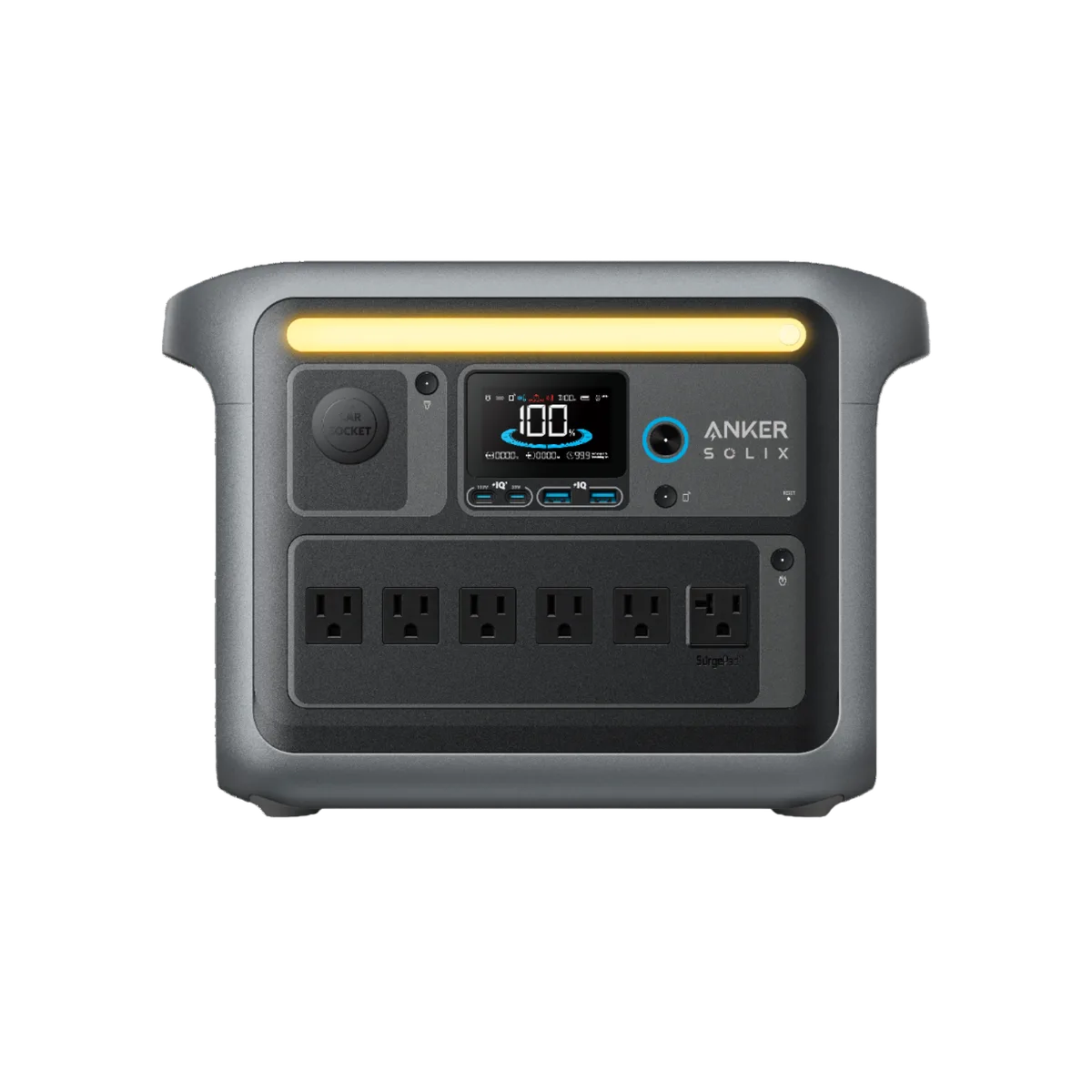
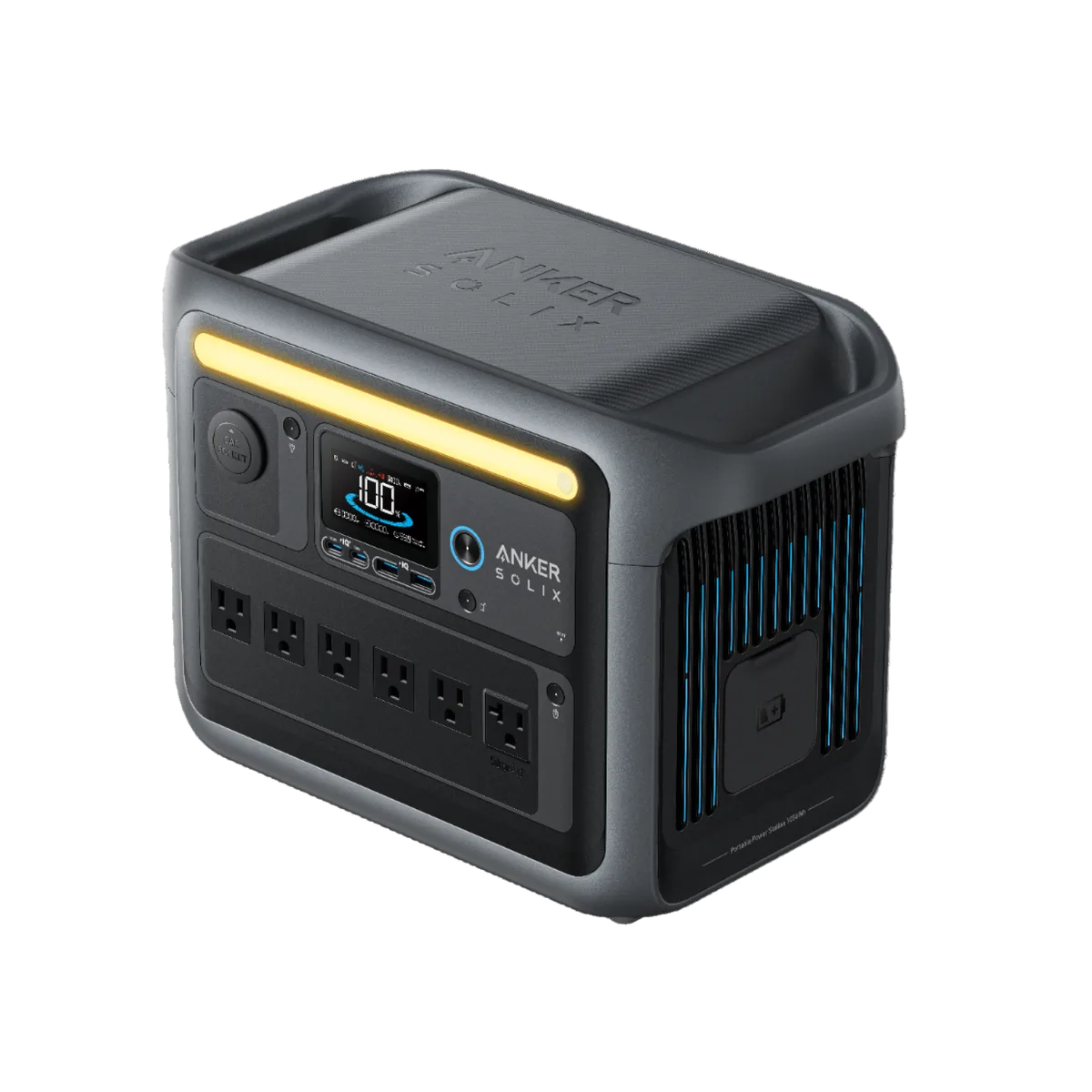
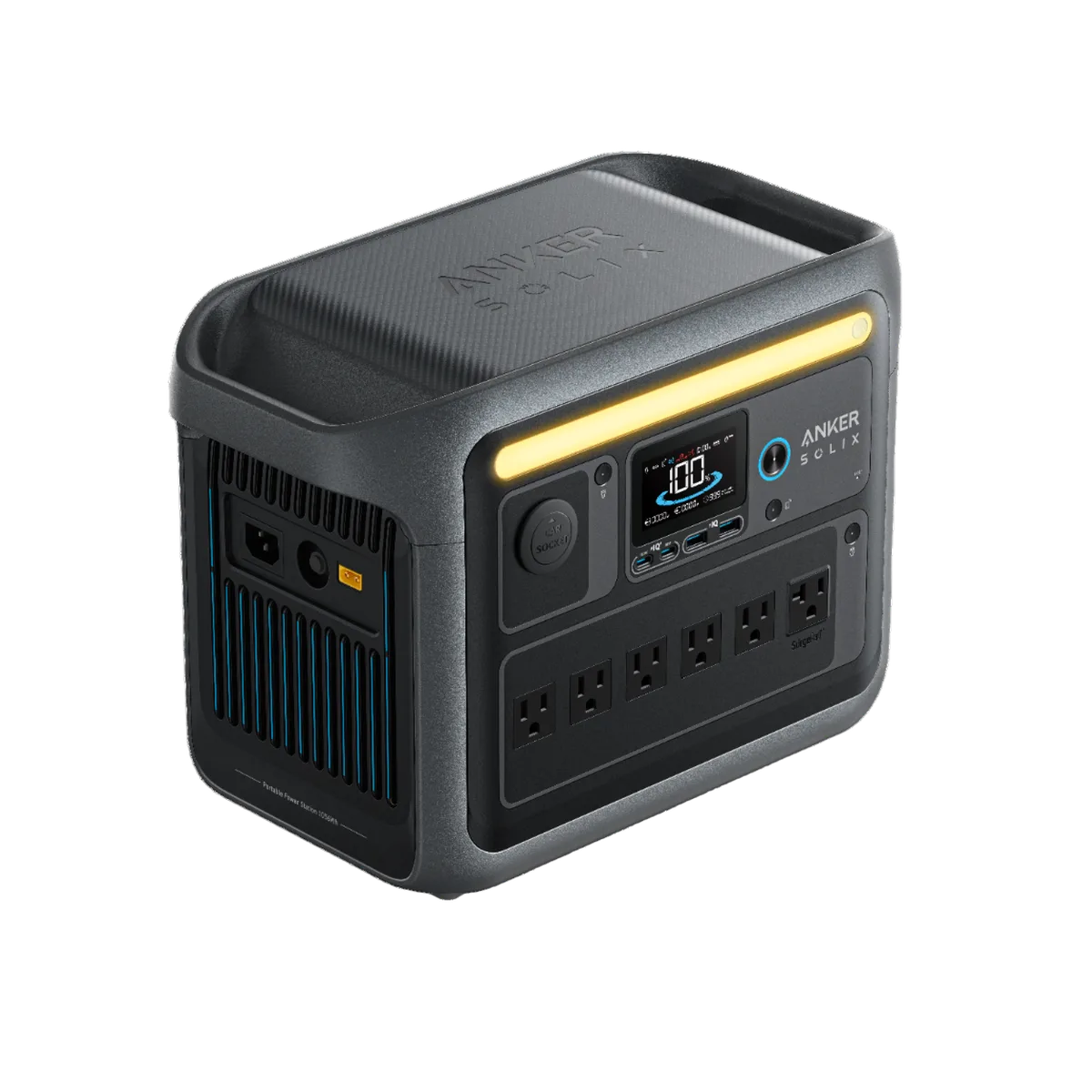
The Anker SOLIX C1000 is a revelation in the weight-to-power ratio. At just 26.8 lbs with 1056Wh capacity and 1800W output, it delivers serious capability in the lightest package on this list. If you are tired of wrestling heavy units in and out of your trunk, the C1000 is freeing.
Why weight-conscious campers should take notice:
- 26.8 lbs is nearly half the weight of the DELTA 2 Max and lighter than the Goal Zero Yeti 1000X
- 1800W output with SurgePad technology handles loads up to 2400W in a pinch
- Ultra-fast AC charging: 0-100% in approximately 58 minutes, the fastest in our roundup
- Retractable overhead light bar is a thoughtful design touch for campsite illumination
- USB-C output at 140W charges the latest laptops at full speed
- Compact footprint fits easily in smaller vehicles
The trade-off is that 1056Wh is the second-lowest capacity on this list. For a solo camper or couple on a weekend trip, it is sufficient. For extended off-grid stays or high-power-draw setups, you will want more capacity. The C1000 is expandable to 2048Wh with an add-on battery, which helps bridge the gap.
Price: Approximately $999
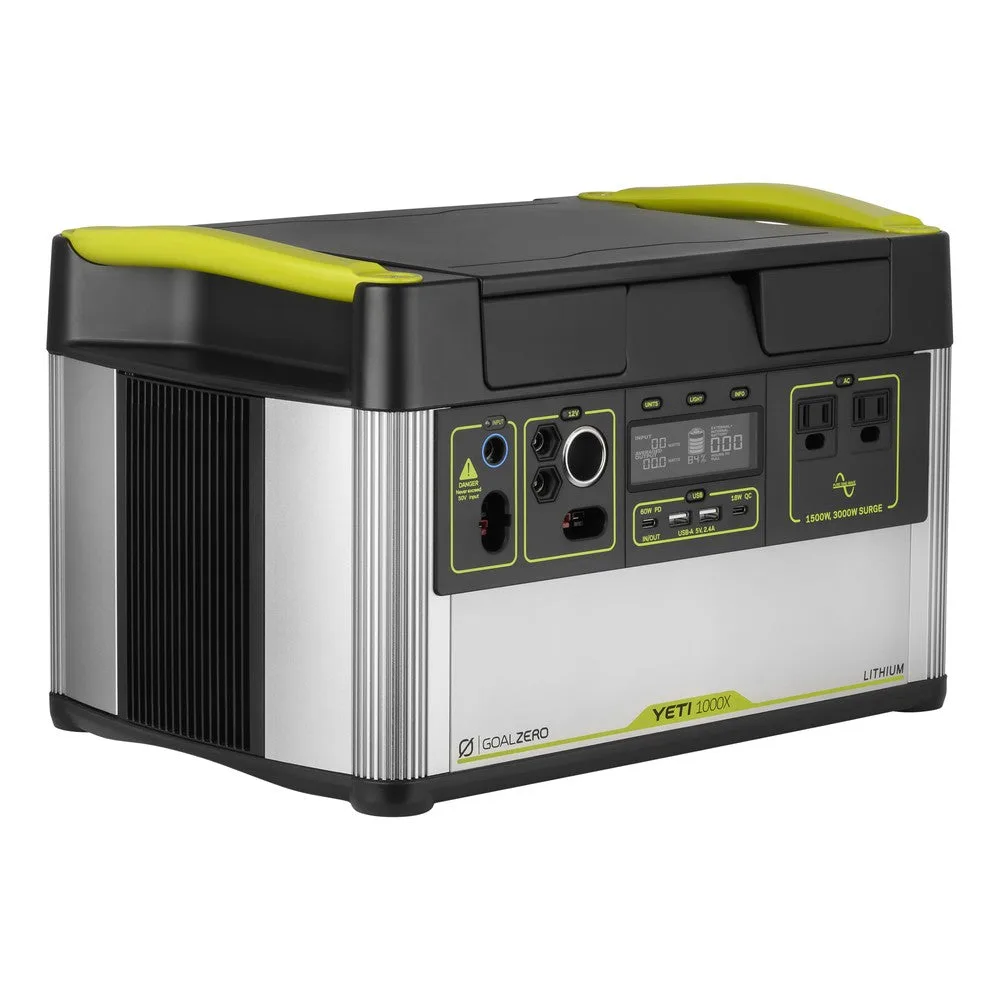
5. Goal Zero Yeti 1000X: Best for Reliability and Brand Trust
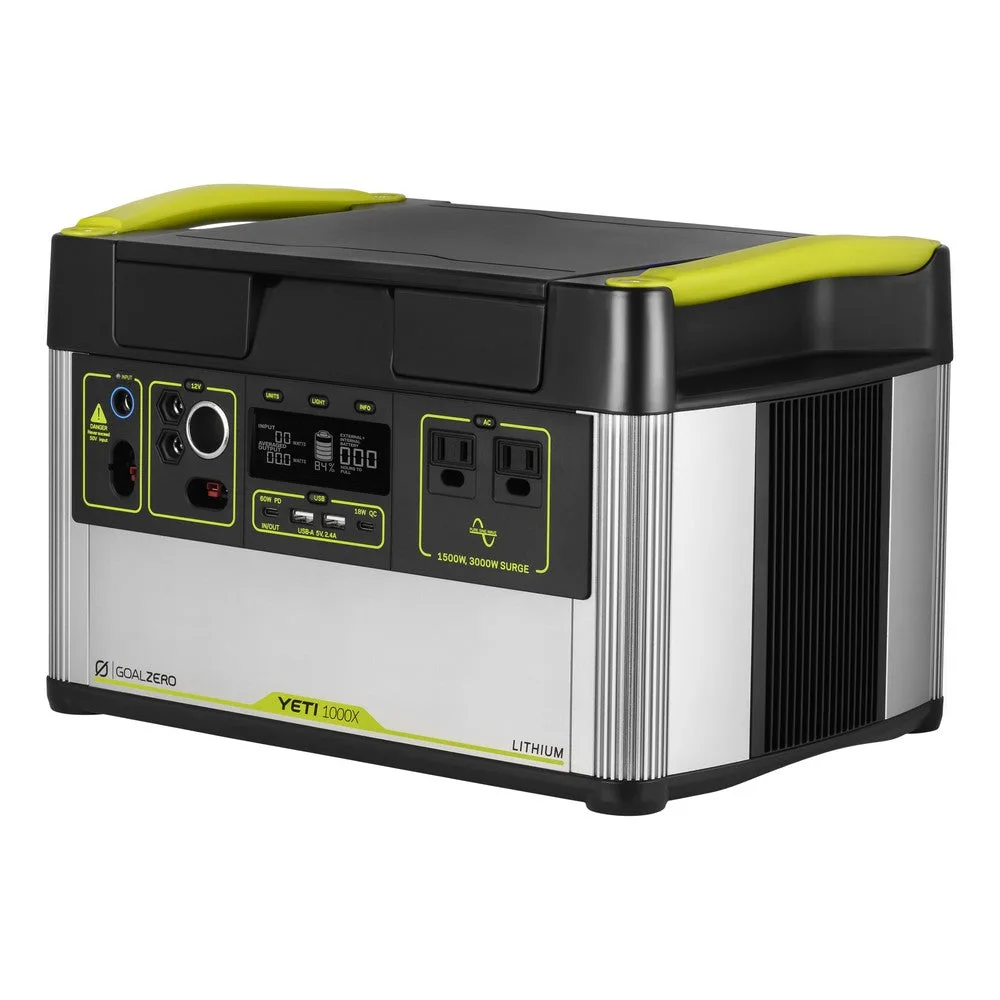
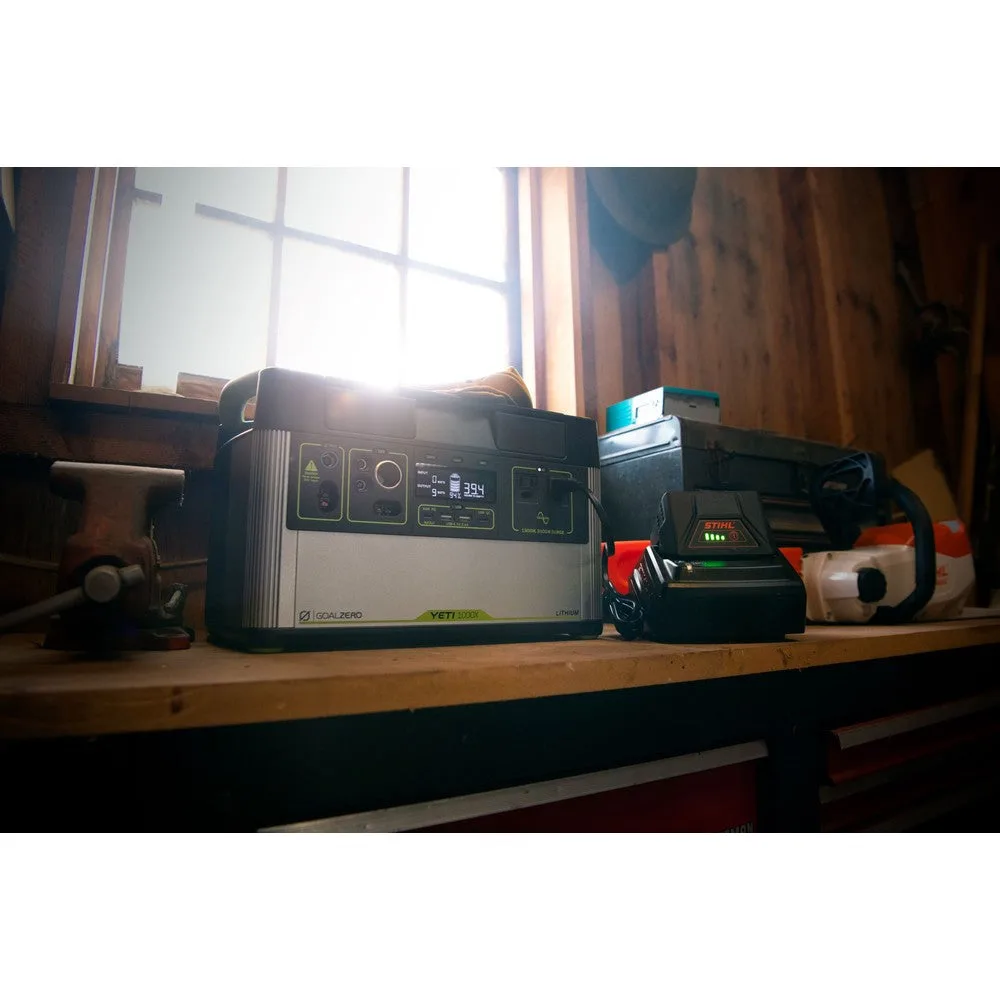
Goal Zero is the original name in portable power, and the Yeti 1000X continues their tradition of rock-solid reliability. It does not lead in any single spec category, but it is built like a tank, backed by excellent customer support, and has a proven track record that inspires confidence.
Why it earns a spot on our list:
- Legendary Goal Zero build quality, used by professionals and emergency responders
- 983Wh capacity with 1500W continuous output covers standard camping needs
- Chainable with Yeti Link expansion modules for increased capacity
- Integrated MPPT controller handles solar input up to 300W
- Excellent ecosystem of compatible Goal Zero panels and accessories
- 12V regulated output for sensitive devices and car accessories
The trade-off is that the Yeti 1000X uses lithium-ion NMC cells rather than LiFePO4, which means a lower cycle life (about 500 cycles to 80%). It is also the least powerful unit on this list at 1500W continuous, and the slower solar input (300W max) means longer recharge times. The price is also higher per watt-hour than competitors. Still, for users who value a proven product from an established brand with exceptional support, the Yeti 1000X remains a solid choice.
Price: Approximately $1,199
Comparison: All Five Units Side by Side
| Feature | DELTA 2 Max | Explorer 1000+ | AC200MAX | SOLIX C1000 | Yeti 1000X |
|---|---|---|---|---|---|
| Capacity | 2048Wh | 1264Wh | 2048Wh | 1056Wh | 983Wh |
| AC Output | 2400W | 2000W | 2200W | 1800W | 1500W |
| Battery | LiFePO4 | LiFePO4 | LiFePO4 | LiFePO4 | Li-ion NMC |
| Cycle Life | 3000+ | 4000 | 3500+ | 3000+ | ~500 |
| Weight | 50.7 lbs | 31.5 lbs | 61.9 lbs | 26.8 lbs | 31.7 lbs |
| Solar Input | 500W | 800W | 900W | 600W | 300W |
| AC Charge | ~96 min | ~100 min | ~4-5 hrs | ~58 min | ~5 hrs |
| Expandable | 6144Wh | 2528Wh | 8192Wh | 2048Wh | Yes (Link) |
| Price | ~$1,699 | ~$1,299 | ~$1,599 | ~$999 | ~$1,199 |
How Did We Test These Power Stations?
Every power station on this list was tested in real camping conditions over multiple trips. Our testing protocol included:
- Runtime tests with standardized loads (12V fridge, LED string lights, phone charging, laptop use)
- Solar charging tests using each brand's recommended panels in comparable weather conditions
- Noise measurements at various load levels using a calibrated decibel meter
- Temperature performance tested in conditions ranging from 35F to 95F
- Durability observations including transport in vehicle cargo areas over rough roads
We also used each unit as a primary power source during weekend camping trips to evaluate the real user experience: how intuitive the controls are, how readable the display is in direct sunlight, and how the unit handles the messy reality of campsite use.
Which Power Station Is Best for Your Camping Style?
- Best overall: EcoFlow DELTA 2 Max: the most capable all-around camping power station
- Best for solar: Jackery Explorer 1000 Plus: unmatched solar charging for its size
- Best for groups: Bluetti AC200MAX: massive capacity with room to expand
- Best lightweight: Anker SOLIX C1000: serious power in the lightest package
- Most trusted: Goal Zero Yeti 1000X: proven reliability from the original brand
No matter which you choose, any of these five units will keep your campsite powered reliably. The best one for you depends on how you camp, how much you carry, and whether solar charging or wall charging is your primary recharge method.
Frequently Asked Questions
How much capacity do I need for a weekend camping trip?
For a typical weekend with a 12V fridge, phone charging, LED lights, and occasional laptop use, plan for 1000-2000Wh. A unit like the Jackery Explorer 1000 Plus (1264Wh) covers a couple comfortably, while the EcoFlow DELTA 2 Max (2048Wh) provides a bigger buffer for families or heavy users. Adding solar panels lets you recharge during the day and stretch a smaller unit further. See our capacity calculation guide for a step-by-step breakdown.
Are portable power stations safe to use in a tent?
Yes. Unlike gas generators, portable power stations produce zero emissions and are safe for enclosed spaces. The main consideration is ventilation for heat dissipation, as all units generate some warmth under heavy loads. Place the unit on a flat, stable surface away from sleeping bags and flammable materials. LiFePO4 models are the safest battery chemistry available.
Can I charge a portable power station while driving?
All five units on this list support 12V car charging via the cigarette lighter outlet. Charge rates vary from about 100W to 200W depending on the model, so a full charge from a car outlet takes many hours. This is best used as a supplemental method, topping off during a long drive rather than relying on it as your primary charging strategy.
Do I need brand-specific solar panels?
No. All five units accept standard solar panels within their voltage and wattage input ranges. That said, brand-matched panels often offer the smoothest connection and optimized performance with each unit's MPPT controller. Third-party panels with MC4 or Anderson connectors work fine; just verify compatibility with the unit's input voltage range (typically 11-60V).
Which power station is best for cold weather camping?
LiFePO4 batteries perform better in cold conditions than standard lithium-ion, making the EcoFlow DELTA 2 Max, Jackery Explorer 1000 Plus, Bluetti AC200MAX, and Anker SOLIX C1000 all solid cold-weather choices. Most units have built-in low-temperature charging protection. For best performance below freezing, keep the unit insulated or inside your vehicle overnight. The Goal Zero Yeti 1000X (Li-ion NMC) is the least cold-tolerant unit in our roundup.
Last updated: March 4, 2026
As an affiliate, we earn from qualifying purchases. This does not affect our editorial independence.
Get Notified When Prices Drop
Join our newsletter for exclusive deal alerts, product comparisons, and energy-saving tips.
As an affiliate, we earn from qualifying purchases. This does not affect our editorial independence.
Related Articles
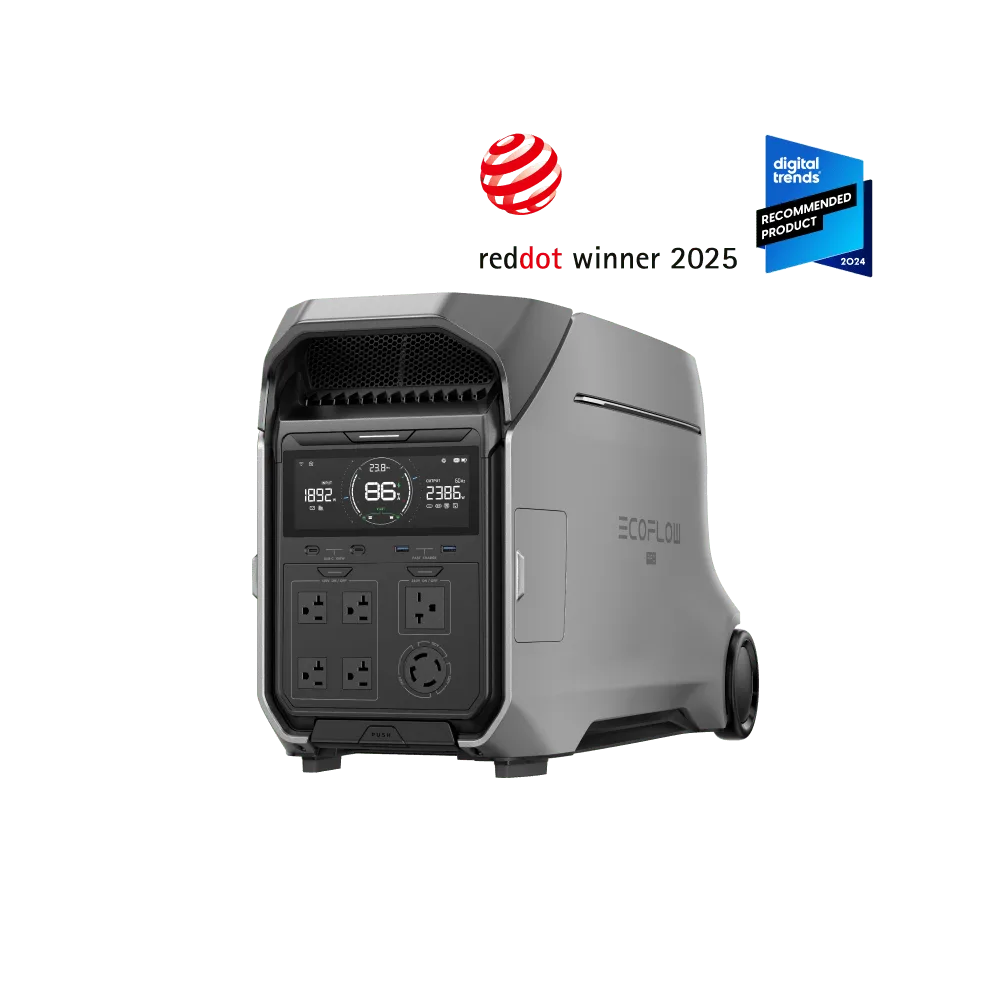
Best Power Stations for Home Backup in 2026: 5 Units That Keep the Lights On
The 5 best portable power stations for home backup in 2026. From whole-home coverage to budget options, find the right backup power for outages.
How Big a Power Station Do I Need? A Step-by-Step Sizing Guide
Calculate the right portable power station size for your needs. Wattage tables, sizing formulas, and product recommendations for every use case.
EcoFlow DELTA 2 Max Review: The Best Mid-Range Power Station in 2026?
Full review of the EcoFlow DELTA 2 Max portable power station: 2048Wh LiFePO4, 2400W output, 68-min fast charging, and app features. Rating: 9/10.