How Many Solar Panels Do I Need? Calculator & Guide
Calculate exactly how many solar panels you need based on your power consumption, location, and goals. Step-by-step sizing guide with real examples.
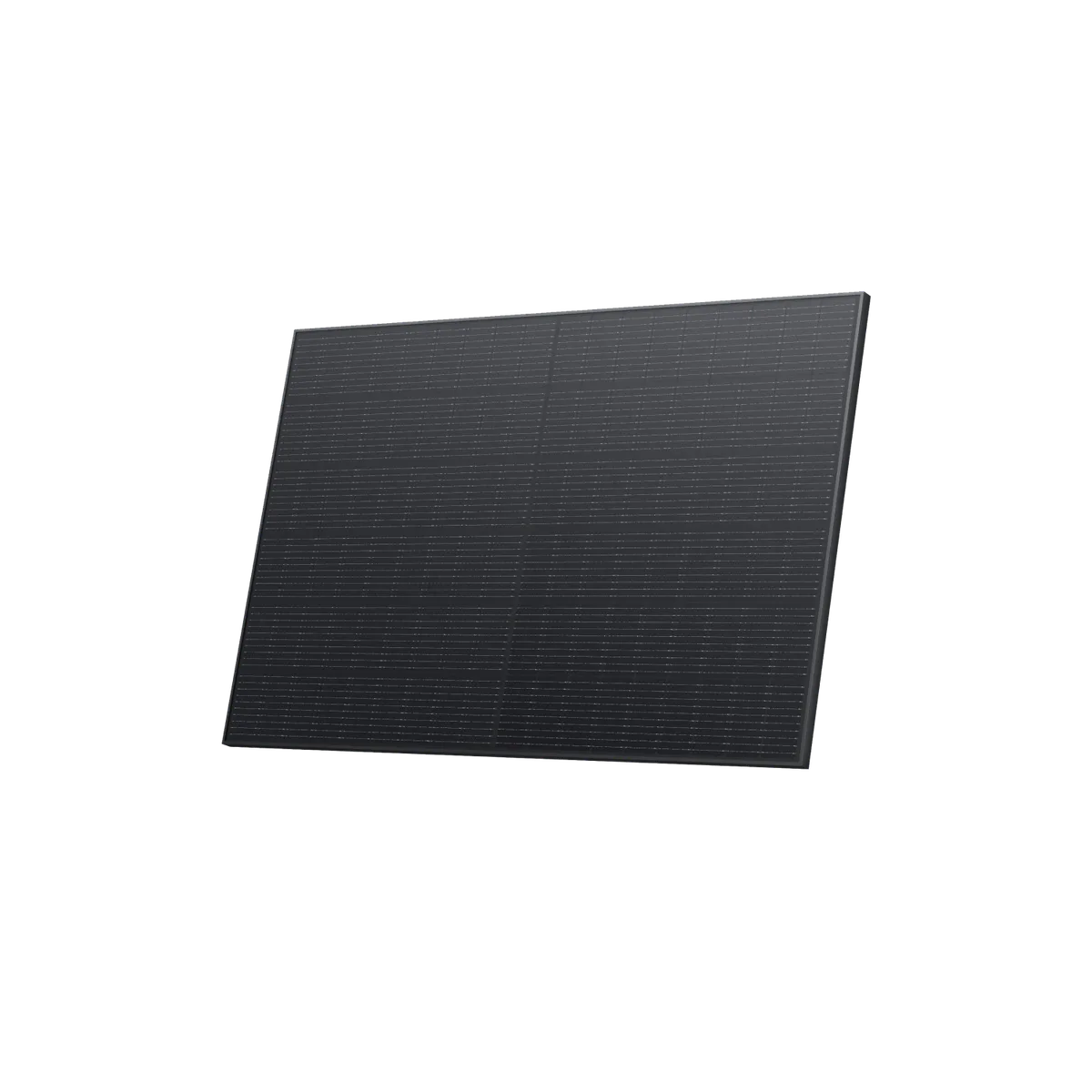
The number of solar panels you need depends on three factors: your daily power consumption in watt-hours, the peak sun hours at your location, and your panel wattage. Use our simple formula — Daily consumption (Wh) divided by (panel wattage times peak sun hours times 0.8) — to calculate your exact needs. We walk through real examples for camping, RVs, home backup, and full residential solar.
The Simple Formula
Here is the core calculation that applies to every solar setup:
Number of panels = Daily power consumption (Wh) / (Panel wattage x Peak sun hours x 0.8)
The 0.8 multiplier is the derating factor — it accounts for real-world losses including cable resistance, charge controller inefficiency, panel temperature effects, dust, shading, and the fact that panels rarely operate at 100% of rated output. Some installers use 0.75 for conservative estimates, but 0.8 is a reasonable middle ground.
Before you can use this formula, you need to determine two things: how much power you actually consume and how many peak sun hours your location receives. We will walk through both.
Step 1: Calculate Your Daily Power Consumption
For Portable Power Station Users
If you are using a portable power station for camping, tailgating, or emergency backup, list every device you plan to run and its wattage:
| Device | Wattage | Hours per Day | Daily Wh |
|---|---|---|---|
| Phone charging | 15W | 2 hours | 30 Wh |
| Laptop | 60W | 4 hours | 240 Wh |
| LED camp lights | 10W | 5 hours | 50 Wh |
| 12V mini fridge | 50W | 24 hours (cycling ~8 hours actual) | 400 Wh |
| Camera battery charger | 20W | 1 hour | 20 Wh |
| Total | 740 Wh |
This is a typical moderate camping scenario. Your daily consumption is 740Wh.
Not sure how to size the power station itself? Our how big a power station do I need calculator covers that side of the equation.
For RV or Van Dwellers
RV power consumption is typically higher due to larger appliances:
| Device | Wattage | Hours per Day | Daily Wh |
|---|---|---|---|
| 12V refrigerator | 60W | 24 hours (cycling ~10 hours) | 600 Wh |
| LED interior lighting | 30W | 6 hours | 180 Wh |
| Laptop | 60W | 4 hours | 240 Wh |
| Phone charging (2 phones) | 30W | 3 hours | 90 Wh |
| Water pump | 60W | 0.5 hours | 30 Wh |
| Roof vent fan | 25W | 8 hours | 200 Wh |
| TV/streaming | 80W | 3 hours | 240 Wh |
| Total | 1,580 Wh |
For Home Backup (Essential Loads Only)
During a power outage, you are not running your whole house — just essentials:
| Device | Wattage | Hours per Day | Daily Wh |
|---|---|---|---|
| Refrigerator | 150W | 24 hours (cycling ~8 hours) | 1,200 Wh |
| Router/modem | 15W | 24 hours | 360 Wh |
| LED lighting (4 rooms) | 40W | 6 hours | 240 Wh |
| Phone charging (4 phones) | 60W | 4 hours | 240 Wh |
| Laptop | 60W | 6 hours | 360 Wh |
| CPAP machine | 50W | 8 hours | 400 Wh |
| Total | 2,800 Wh |
For home backup power station options, see our best power stations for home backup guide.
For Full Residential Solar
A typical US household consumes approximately 30,000 Wh (30 kWh) per day, though this varies widely by region, household size, and climate. Check your utility bill for your actual monthly kWh — divide by 30 for your daily average.
Step 2: Determine Your Peak Sun Hours
Peak sun hours (PSH) represent the number of hours per day when solar irradiance averages 1,000 watts per square meter — the intensity used to rate solar panels. This is not the same as hours of daylight. A 12-hour summer day might only deliver 5-6 peak sun hours because morning, evening, and cloudy periods produce less intense light.
Average Peak Sun Hours by Region (Annual Average)
| Region | Peak Sun Hours | Examples |
|---|---|---|
| High solar (6+ hours) | 6-7 PSH | Arizona, Nevada, Southern California, West Texas |
| Good solar (5-6 hours) | 5-6 PSH | Florida, Colorado, most of Southern US, Southern Europe |
| Moderate solar (4-5 hours) | 4-5 PSH | Mid-Atlantic, Midwest, Pacific Northwest (summer), Northern Europe (summer) |
| Low solar (3-4 hours) | 3-4 PSH | Pacific Northwest (winter), Northern US (winter), UK, Scandinavia |
For more precise data, the National Renewable Energy Laboratory (NREL) provides a solar resource data tool that shows peak sun hours for any US location.
Important: If you are planning for year-round use, size your system for the worst month (typically December or January), not the annual average. If you are only using solar during summer camping season, use summer PSH values, which are significantly higher.
Step 3: Run the Calculation
Now plug your numbers into the formula. Let us work through each scenario.
Example 1: Camping With a Portable Power Station
- Daily consumption: 740 Wh
- Panel wattage: 200W (e.g., Jackery SolarSaga 200W)
- Peak sun hours: 5 PSH (typical summer camping in moderate climate)
- Derating factor: 0.8
Panels needed = 740 / (200 x 5 x 0.8) = 740 / 800 = 0.93
Result: 1 panel of 200W is sufficient for this camping scenario. A single 200W panel produces approximately 800Wh per day in 5 PSH conditions after derating — just enough to cover 740Wh of consumption.
This leaves very little margin, so consider bringing a second panel if you expect cloudy days or higher consumption. Check our best portable solar panels for panel recommendations.
Example 2: RV Full-Time Living
- Daily consumption: 1,580 Wh
- Panel wattage: 200W (e.g., Renogy 200W Monocrystalline)
- Peak sun hours: 5 PSH (annual average, Sun Belt travel)
- Derating factor: 0.8
Panels needed = 1,580 / (200 x 5 x 0.8) = 1,580 / 800 = 1.98
Result: 2 panels of 200W (400W total). This provides approximately 1,600Wh per day, barely covering the 1,580Wh consumption. For comfortable margin, especially if you travel through areas with fewer sun hours, 3 panels (600W total) is the safer choice. Three panels produce approximately 2,400Wh per day, giving you a 50% buffer for cloudy days and winter months.
Example 3: Home Backup During Power Outage
- Daily consumption: 2,800 Wh
- Panel wattage: 400W (e.g., EcoFlow 400W Rigid)
- Peak sun hours: 4 PSH (winter, when outages are most common)
- Derating factor: 0.8
Panels needed = 2,800 / (400 x 4 x 0.8) = 2,800 / 1,280 = 2.19
Result: 3 panels of 400W (1,200W total). This produces approximately 3,840Wh per day in winter conditions, providing enough power for essential loads with a reasonable buffer. Note that this assumes you have a power station or battery system large enough to store and distribute this energy — our best home battery storage roundup covers storage options.
Alternatively, 6 panels of 200W achieve the same total wattage at a lower cost per watt, though they require more mounting space and cabling.
Example 4: Full Residential Solar (Grid-Tied)
- Daily consumption: 30,000 Wh (30 kWh — US average)
- Panel wattage: 400W (standard residential panel)
- Peak sun hours: 5 PSH (annual average, moderate climate)
- Derating factor: 0.8 (includes inverter losses for grid-tied)
Panels needed = 30,000 / (400 x 5 x 0.8) = 30,000 / 1,600 = 18.75
Result: 19-20 panels of 400W (7.6-8 kW system). This is a typical residential solar installation that offsets most or all of a household's electricity consumption. Professional installers typically add 10-20% extra capacity to account for panel degradation and consumption growth, bringing the practical recommendation to 22-24 panels.
What If You Cannot Fit Enough Panels?
If your available space (rooftop, ground area, or portability constraints) cannot accommodate the calculated number of panels, you have several options:
Option 1: Use Higher-Efficiency Panels
Higher-efficiency panels produce more watts per square foot. Switching from a 23% efficiency panel to a 26.7% panel (like the Jackery SolarSaga 200W) gets you approximately 15% more power from the same physical area.
Option 2: Reduce Your Consumption
Often the cheapest "solar panel" is the one you do not need. LED bulbs instead of incandescent, a more efficient fridge, or simply running fewer devices can dramatically reduce your required panel count.
Option 3: Supplement With Grid or Generator
For home backup scenarios, solar can cover daytime needs while a small generator handles nighttime or extended cloudy periods. This hybrid approach lets you install fewer panels while maintaining reliable power.
Option 4: Add Battery Storage
A larger battery bank lets you store surplus solar production from sunny days for use during cloudy periods, effectively smoothing out the variability. This does not reduce the panels needed but reduces the impact of day-to-day solar variations. See our how to choose a home battery system guide.
How Seasonality Affects Your Calculation
The examples above use average peak sun hours, but solar production varies significantly by season:
| Season | Relative Production (vs Summer) | Notes |
|---|---|---|
| Summer | 100% (baseline) | Longest days, highest sun angle |
| Spring/Fall | 65-80% | Moderate days, lower sun angle |
| Winter | 35-55% | Short days, low sun angle, more clouds |
If you need consistent year-round power (RV full-timing, off-grid cabin), size your system for winter production. This means your system will be oversized for summer, but you will have enough power when days are shortest.
If you only use solar seasonally (summer camping), size for summer conditions and enjoy the higher output.
Quick Reference: Common Setups
| Use Case | Daily Need | Recommended Panels | Total Wattage |
|---|---|---|---|
| Weekend camping (light use) | 300-500 Wh | 1x 200W portable | 200W |
| Weekend camping (moderate use) | 500-800 Wh | 1x 200W portable | 200W |
| Extended camping / overlanding | 800-1,200 Wh | 2x 200W portable | 400W |
| RV weekender | 800-1,200 Wh | 2x 200W rigid | 400W |
| RV full-timer | 1,500-2,500 Wh | 3x 200W rigid | 600W |
| Off-grid cabin (basic) | 2,000-3,000 Wh | 3-4x 200W rigid | 600-800W |
| Home backup (essentials) | 2,500-4,000 Wh | 3x 400W rigid | 1,200W |
| Full residential solar | 20,000-40,000 Wh | 18-30x 400W rigid | 7-12 kW |
Do Not Forget the Charge Controller
Solar panels need a charge controller between them and your battery or power station (portable power stations have one built in). If you are building a DIY system with a separate battery bank, you need to size your charge controller for your total panel array:
- PWM controllers are simpler and cheaper but less efficient (best for small systems under 200W)
- MPPT controllers extract 15-30% more power and are recommended for systems of 200W+
The charge controller must be rated for the total wattage and voltage of your panel array. Two 200W panels in series produce about 48V at 10A, while two panels in parallel produce about 24V at 20A. Your controller must handle whichever configuration you choose.
Frequently Asked Questions
Should I buy one large panel or several smaller ones?
For portable use, one or two 200W panels are ideal — they balance output with portability. For fixed installations, fewer larger panels (400W) mean less mounting hardware and cabling, but more smaller panels (200W) are cheaper per watt and easier to replace individually. Cost per watt usually favors smaller panels, while installation convenience favors larger ones.
Can I add more solar panels later?
Yes. Most charge controllers and power stations accept additional panels as long as you do not exceed their maximum input wattage and voltage. When expanding, try to use identical panels for optimal performance — mixing different panel models can cause voltage mismatch issues, particularly when wiring in series.
What happens on cloudy days?
Solar panels still produce power on cloudy days, but at reduced output — typically 20-50% of their rated wattage depending on cloud thickness. When sizing your system, the derating factor (0.8) partially accounts for average cloud cover. If you live in a consistently cloudy climate, use a more conservative derating factor (0.7) or size your system for winter peak sun hours.
Is it better to have too many or too few solar panels?
Having slightly more solar capacity than your minimum calculation suggests is always better than having too little. Extra panels provide a buffer for cloudy days, winter production drops, and future consumption increases. The only downside is cost and space — if you can fit and afford an extra panel, it is worth adding. Most portable power stations simply cap their solar input if you exceed their maximum, so there is no risk of damage from oversizing the panel array.
Get Notified When Prices Drop
Join our newsletter for exclusive deal alerts, product comparisons, and energy-saving tips.
What Real Users Say
“Used this kind of calculation for my RV setup. Two 200W panels and a 1000Wh station keeps everything running on sunny days without plugging in.”
“People always overbuy or underbuy solar. Do the math first — it saves you hundreds of dollars and a lot of frustration.”
Related Articles
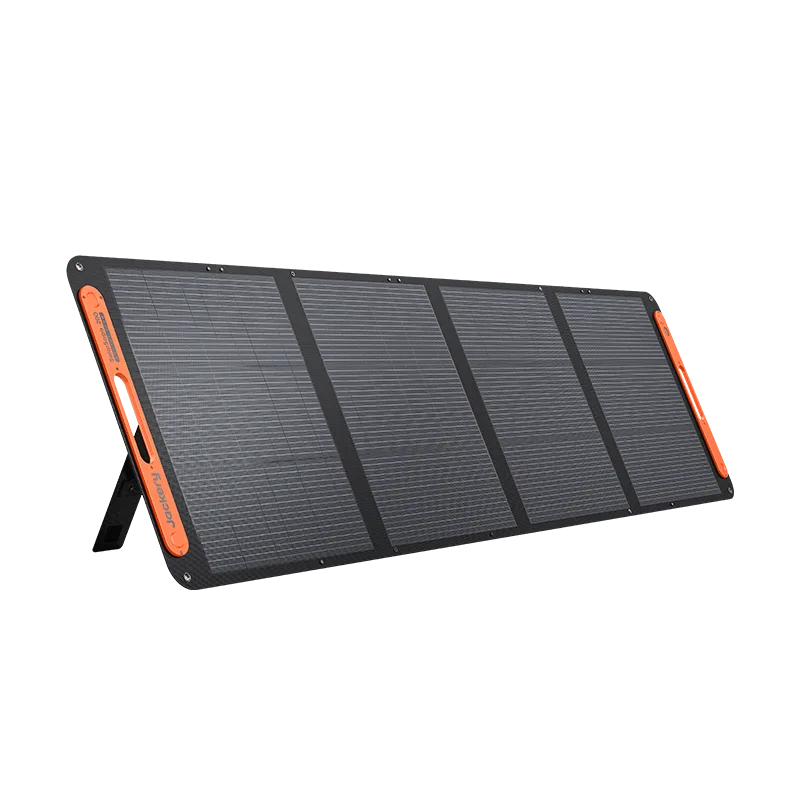
Best Portable Solar Panels in 2026: 5 Top Picks Tested
We tested and compared the top portable solar panels for 2026. Our picks for camping, power stations, RVs, and emergency backup.
How to Choose a Solar Panel: Complete Buyer's Guide for 2026
Everything you need to know before buying a solar panel. Wattage, efficiency, panel types, connectors, and how to match panels to your power station or system.
Jackery SolarSaga 200W Review: The Best Foldable Solar Panel in 2026?
Full review of the Jackery SolarSaga 200W foldable solar panel: bifacial IBC cells, 26.7% efficiency, IP68 waterproof, and USB ports. Our verdict after real-world testing.