How to Choose a Solar Panel: Complete Buyer's Guide for 2026
Everything you need to know before buying a solar panel. Wattage, efficiency, panel types, connectors, and how to match panels to your power station or system.
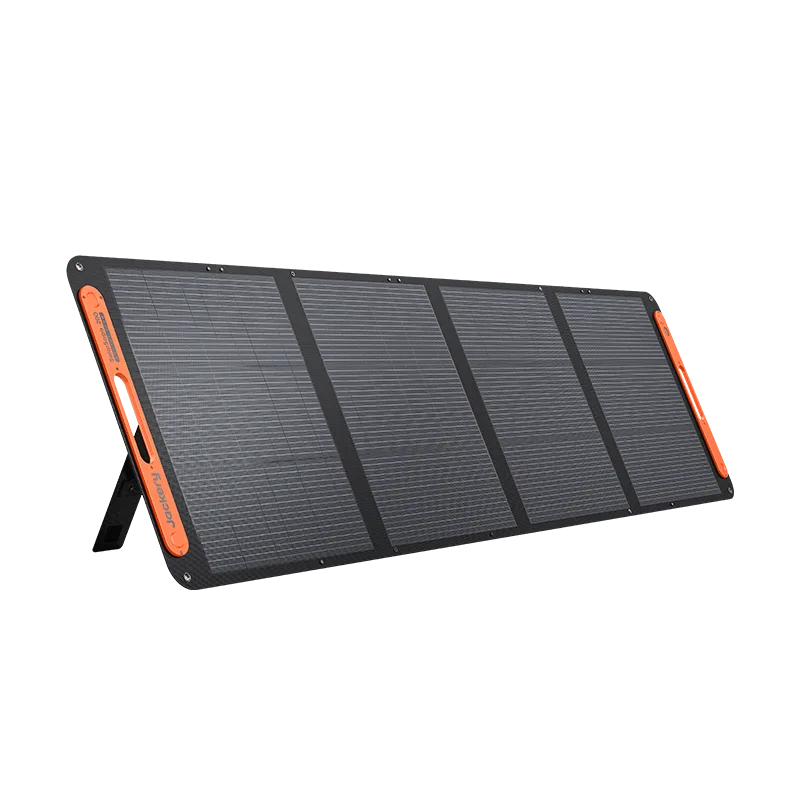
Choosing the right solar panel depends on four key factors: what you are powering, where you will use it, whether you need portability, and your budget. This guide covers panel types, efficiency ratings, wattage calculations, connector compatibility, and the most common mistakes buyers make in 2026.
Why Choosing the Right Solar Panel Matters
Solar panels are a long-term investment, and buying the wrong one wastes both money and time. An underpowered panel leaves you waiting hours for a charge. An overpowered panel wastes capacity you cannot use. A portable panel mounted permanently degrades faster than a rigid one built for the job. And an incompatible connector turns a simple setup into an adapter nightmare.
The good news is that solar panel technology has matured considerably. The panels available in 2026 are more efficient, more durable, and more affordable than anything from even two years ago. But the increased variety also means more decisions. This guide walks through every factor you need to consider.
What Are the Different Types of Solar Panels?
Foldable Portable Panels
Foldable panels are designed for camping, overlanding, tailgating, and emergency preparedness. They fold into a compact package (typically briefcase-sized), weigh 10-20 lbs, and can be set up and taken down in minutes. Most range from 100W to 400W.
Best for: Weekend campers, car campers, emergency backup, anyone who needs to pack and carry their panel.
Examples: Jackery SolarSaga 200W, Bluetti PV200, BougeRV 200W
Rigid Mounted Panels
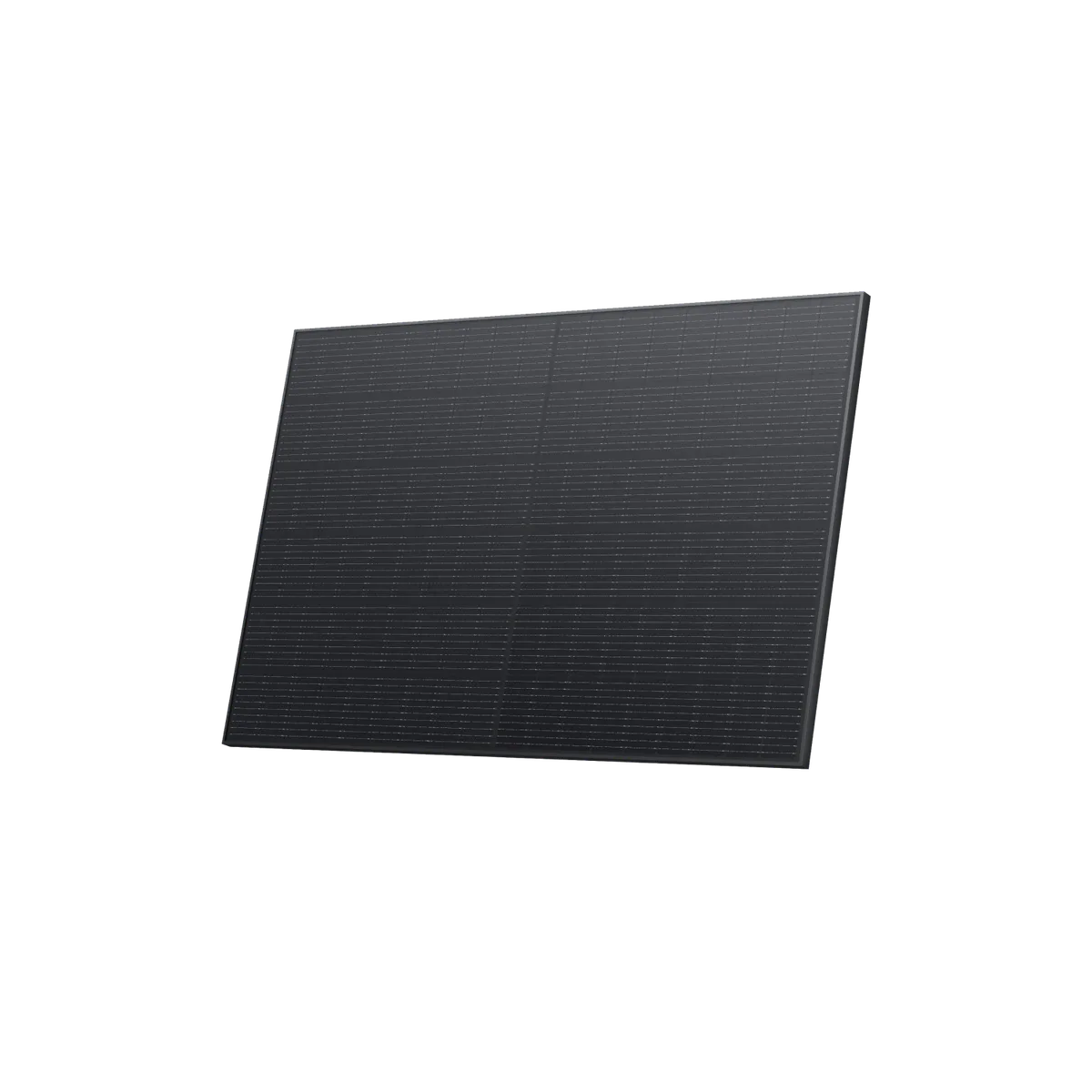
Rigid panels use an aluminum frame and tempered glass to protect the cells. They are designed for permanent or semi-permanent installation on RV rooftops, cabin roofs, ground-mount frames, and residential rooftops. They range from 100W to 400W+ per panel.
Best for: RV owners, off-grid cabins, permanent solar installations, balcony solar setups.
Examples: Renogy 200W Monocrystalline, EcoFlow 400W Rigid
Flexible Panels
Flexible panels use thin-film cells bonded to a bendable substrate. They can conform to curved surfaces like boat decks or rounded RV roofs. They are lighter than rigid panels but typically less efficient and shorter-lived.
Best for: Boats, curved RV roofs, weight-sensitive installations where rigid panels cannot be mounted.
Residential Rooftop Panels
Residential panels are large (typically 350-450W), professionally installed systems designed to power an entire home. They involve permits, grid interconnection, and professional installation. This category is beyond the scope of this guide — we focus on portable and small-scale solar.
How Much Wattage Do You Need?
The right wattage depends entirely on what you are charging and how quickly you need it charged. Here is a practical framework:
For Portable Power Stations
Match your panel wattage to your power station's solar input capacity and your recharging expectations:
| Power Station Size | Recommended Panel Wattage | Approximate Full Charge Time |
|---|---|---|
| 300-500Wh | 100-200W | 3-5 hours |
| 500-1000Wh | 200W | 4-7 hours |
| 1000-2000Wh | 200-400W | 5-10 hours |
| 2000Wh+ | 400W+ (or multiple panels) | 6-12+ hours |
Important: Check your power station's maximum solar input wattage. If your station accepts 200W max, using a 400W panel will not charge it faster — the charge controller will cap the input. See our how to choose a portable power station guide for details on power station solar inputs.
For 12V Battery Systems (RVs, Boats, Cabins)
Calculate your daily power consumption in watt-hours, then size your panels to generate that amount in the peak sun hours available at your location:
Panel wattage needed = Daily consumption (Wh) / Peak sun hours / 0.8
The 0.8 factor accounts for real-world losses (cable resistance, charge controller inefficiency, temperature effects). For a deeper dive with specific examples, see our how many solar panels do I need calculator.
What Does Solar Panel Efficiency Actually Mean?
Efficiency is the percentage of sunlight hitting the panel surface that gets converted into electricity. In 2026, portable solar panels range from about 21% to 27% efficiency.
Why Efficiency Matters
Higher efficiency means:
- More power from the same size panel — a 26.7% panel produces about 15% more electricity than a 23% panel of the same physical dimensions
- Lighter and smaller panels for the same wattage — efficient panels achieve their rated wattage with fewer cells
- Better performance in suboptimal conditions — high-efficiency cells maintain a larger percentage of output during clouds, haze, and low sun angles
Why Efficiency Is Not Everything
A 200W panel rated at 23% efficiency still produces 200W in standard conditions. A 200W panel at 26.7% efficiency also produces 200W. The difference is that the 26.7% panel achieves that 200W in a smaller, lighter package and maintains its output better when conditions are not ideal.
If panel size and weight are not constraints (e.g., a fixed rooftop installation), a slightly less efficient but cheaper panel may deliver better value per dollar.
Efficiency by Cell Type (2026)
| Cell Type | Typical Efficiency | Notes |
|---|---|---|
| IBC Monocrystalline | 25-27% | Highest efficiency, premium price |
| N-Type Monocrystalline | 23-25% | Excellent efficiency, good value |
| PERC Monocrystalline | 21-23% | Most common, proven technology |
| Polycrystalline | 17-19% | Older technology, avoid for new purchases |
| Thin Film (CIGS/CdTe) | 15-18% | Flexible, lowest efficiency |
What Connectors Do Solar Panels Use?
Connector compatibility is one of the most overlooked aspects of solar panel buying, and getting it wrong means you either need adapters or cannot use your panel at all.
MC4 Connectors (Universal Standard)
MC4 (Multi-Contact 4mm) connectors are the industry standard for solar panels. Nearly every rigid panel and many foldable panels use MC4. They are waterproof, durable, and work with virtually any charge controller, power station (with appropriate adapter), or solar system.
Used by: Renogy, Bluetti, BougeRV, EcoFlow rigid panels, most third-party brands
Proprietary Connectors
Some brands use proprietary connectors to ensure compatibility within their ecosystem:
- Jackery DC8020 — used on all Jackery SolarSaga panels, connects directly to Jackery Explorer stations
- EcoFlow XT60 — used on some EcoFlow portable panels
Proprietary connectors work well within their brand ecosystem but require adapter cables ($15-25) for cross-brand compatibility.
Anderson Powerpole
Common in the DIY and amateur radio communities, Anderson connectors are used on some power stations and solar controllers. They are less common than MC4 but offer easy connect/disconnect.
USB Ports
Some portable panels include built-in USB-C and/or USB-A ports for direct device charging. These are convenient but cannot replace a proper DC or MC4 connection for charging power stations or battery systems. Think of USB ports as a bonus feature, not a primary output.
How to Match a Solar Panel to Your Power Station
If you are buying a panel specifically to charge a portable power station, check three things:
1. Maximum Solar Input Wattage
Every power station has a maximum solar input rating. Common values:
- Jackery Explorer 1000 Plus: 800W max
- EcoFlow DELTA 2 Max: 500W max
- Bluetti AC200P: 700W max
Your panel wattage should not exceed this limit. Using a 400W panel on a station that accepts 200W max will not damage anything (the charge controller limits input), but you are paying for panel capacity you cannot use.
2. Voltage Range
Power stations specify a voltage range for solar input (e.g., 11-60V). Your panel's operating voltage must fall within this range. Most 200W panels operate at 18-24V, which is compatible with virtually all portable power stations.
3. Connector Compatibility
Check whether your power station uses MC4, XT60, DC barrel, or a proprietary input. Most brands include the necessary cable, but cross-brand setups may require an adapter.
For detailed power station recommendations, see our best portable power stations for camping or best power stations for home backup.
What About Waterproofing?
Solar panels are outdoor devices, so weather resistance matters. Look for IP ratings:
| Rating | Protection Level | Practical Meaning |
|---|---|---|
| IP65 | Protected against low-pressure water jets | Handles normal rain, light splashing |
| IP67 | Protected against temporary submersion (1m, 30 min) | Handles heavy rain, accidental puddles |
| IP68 | Protected against continuous submersion (manufacturer-specified depth) | Maximum water protection |
For camping use, IP65 is the minimum acceptable rating. If you frequently camp in wet climates or leave your panels deployed overnight (dew, condensation), IP67 or IP68 provides valuable peace of mind. The Jackery SolarSaga 200W is one of the few foldable panels with an IP68 rating.
What Warranty Should You Expect?
Warranty length varies dramatically and is a strong signal of product quality:
- Foldable panels: 1-5 years (Jackery SolarSaga: 5 years, Bluetti PV200: 2 years, BougeRV: 18 months)
- Rigid panels: 5-25 years (Renogy: 25 years performance, EcoFlow: 10 years)
For permanent installations, prioritize panels with 10+ year warranties. For portable panels that see rougher handling, even a 2-3 year warranty is reasonable, though longer is always better.
The 5 Most Common Solar Panel Buying Mistakes
1. Buying Too Little Wattage
The most common mistake is underestimating how much solar you need. A 100W panel sounds appealing for its low price and light weight, but it takes 10+ hours to charge a 1000Wh power station — assuming perfect sunlight the entire time. For most use cases, 200W is the practical minimum.
2. Ignoring Connector Compatibility
Buying a panel with a proprietary connector when you own a different brand's power station means ordering adapters, waiting for delivery, and adding a potential failure point. Check compatibility before purchase.
3. Comparing Rated Wattage Instead of Real-World Output
All 200W panels are "200W" on paper, but real-world output varies from 155W to 185W depending on cell efficiency. A 200W panel with 26.7% efficiency produces more actual power than a 200W panel with 23% efficiency. Look at the efficiency rating, not just the wattage number.
4. Choosing Portable Panels for Fixed Installations
Foldable panels are convenient, but they are not designed for permanent outdoor mounting. Their ETFE lamination degrades faster under continuous UV exposure than the tempered glass on rigid panels, and their warranties are shorter. If your panel will live on a roof or mount, buy a rigid panel.
5. Forgetting About Temperature
Solar panels produce less power as temperature increases. A panel rated at 200W under Standard Test Conditions (STC at 77 degrees F / 25 degrees C) may produce only 170-180W on a hot summer day. N-Type and IBC cells handle heat better than standard P-Type cells — worth considering if you live in a hot climate.
Quick Decision Framework
Answer these three questions to narrow your choice:
1. Will the panel be portable or permanently mounted?
- Portable → Foldable panel (Jackery SolarSaga, Bluetti PV, BougeRV)
- Permanent → Rigid panel (Renogy 200W, EcoFlow 400W)
2. What are you charging?
- Power station → Match panel wattage to station's solar input capacity
- 12V battery system → Calculate daily consumption and size accordingly
- Direct USB devices → Any panel with built-in USB ports
3. What is your budget?
- Under $300 → BougeRV 200W or similar budget foldable
- $300-500 → Jackery SolarSaga 200W, Bluetti PV200
- $200-250 for rigid → Renogy 200W Monocrystalline
For our specific product recommendations, see the best portable solar panels in 2026.
Frequently Asked Questions
How long do solar panels last?
Rigid panels with tempered glass and aluminum frames typically last 25-30 years, with gradual efficiency degradation of about 0.5% per year. Foldable panels with ETFE lamination last 10-15 years with moderate use. The lifespan depends heavily on how the panel is stored and handled — UV exposure, moisture, and physical damage are the main degradation factors.
Can I use any solar panel with any power station?
Technically yes, as long as the connector fits (or you use an adapter) and the panel's voltage falls within the power station's accepted input range. However, exceeding the station's maximum solar input wattage will not provide faster charging — the charge controller will cap the input. Always check your power station's specs before buying a panel.
Is it worth paying more for higher efficiency?
For portable use where weight and size matter, yes — higher efficiency means a lighter, smaller panel for the same wattage. For fixed installations where space is not constrained, the cost-per-watt of the panel is often a better metric than raw efficiency. A cheaper, slightly less efficient panel may deliver better value if you have room to mount a larger panel.
Do solar panels work in winter?
Yes. Solar panels actually perform slightly better in cold temperatures (they lose efficiency in heat, not cold). However, winter days are shorter, the sun is lower in the sky, and cloud cover may be more frequent — all of which reduce total daily energy production. In northern US states, expect roughly 40-60% of summer production during winter months.
Get Notified When Prices Drop
Join our newsletter for exclusive deal alerts, product comparisons, and energy-saving tips.
What Real Users Say
“Wish I'd read a guide like this before my first purchase. Bought a 100W panel for my 2000Wh station and wondered why it took 3 days to charge.”
“The connector thing tripped me up — bought a Jackery panel for my EcoFlow and had to order an adapter. Check compatibility before you buy!”
Related Articles
Best Portable Solar Panels in 2026: 5 Top Picks Tested
We tested and compared the top portable solar panels for 2026. Our picks for camping, power stations, RVs, and emergency backup.
How Many Solar Panels Do I Need? Calculator & Guide
Calculate exactly how many solar panels you need based on your power consumption, location, and goals. Step-by-step sizing guide with real examples.
Jackery SolarSaga 200W Review: The Best Foldable Solar Panel in 2026?
Full review of the Jackery SolarSaga 200W foldable solar panel: bifacial IBC cells, 26.7% efficiency, IP68 waterproof, and USB ports. Our verdict after real-world testing.