Wallbox Pulsar Plus vs JuiceBox 48: Which Smart EV Charger Should You Pick?
Wallbox Pulsar Plus vs JuiceBox 48 compared. We test charging speed, app features, design, and value to pick the better home EV charger.
As an affiliate, we earn from qualifying purchases. This does not affect our editorial independence.
Pros
- ✓Wallbox Pulsar Plus is one of the smallest Level 2 chargers on the market
- ✓Wallbox app is polished, reliable, and supports multiple chargers
- ✓Available globally with strong dealer and installer network
- ✓Bluetooth + Wi-Fi connectivity for flexible setup
- ✓Power Boost feature prevents breaker overloads
Cons
- ✗JuiceBox 48 is harder to find since Enel X Way exited the US market
- ✗Neither charger includes a NACS connector option yet
- ✗Both require a 60A circuit breaker for full 48A output
- ✗Wallbox lacks built-in energy monitoring without add-ons
Head-to-Head Comparison
| Wallbox Pulsar PlusOur Pick | JuiceBox 48 | |
|---|---|---|
| maxAmps | 48A | 48A |
| power | 11.5 kW | 11.5 kW |
| connector | J1772 | J1772 |
| cableLength | 25 ft | 25 ft |
| Warranty | 3 years | 3 years |
| Check Price | Check Price |
The Wallbox Pulsar Plus edges out the JuiceBox 48 thanks to its superior app experience, ultra-compact design, and wider retail availability. Both deliver 48A / 11.5 kW charging with 25-foot cables, but Wallbox's continued investment in its platform and global support network gives it a clear advantage for buyers shopping in 2026.
Why Compare These Two Chargers?
The Wallbox Pulsar Plus and JuiceBox 48 share nearly identical core specs: 48 amps, 11.5 kW output, J1772 connectors, and 25-foot cables. On paper, they look like twins. The real differences show up in software, design philosophy, and long-term support.
This matters more now than ever. Enel X Way, the company behind JuiceBox, exited the North American market in 2024. While existing JuiceBox chargers still work, the future of software updates and customer support is uncertain. Wallbox, by contrast, continues to expand its US and European presence.
Head-to-Head Specs
| Feature | Wallbox Pulsar Plus | JuiceBox 48 |
|---|---|---|
| Max Amperage | 48A (adjustable 16-48A) | 48A (adjustable 16-48A) |
| Max Power | 11.5 kW (240V) | 11.5 kW (240V) |
| Charging Speed | Up to 37 mi/hr | Up to 37 mi/hr |
| Cable Length | 25 ft (7.6 m) | 25 ft (7.6 m) |
| Connector | J1772 | J1772 |
| Connectivity | Wi-Fi + Bluetooth | Wi-Fi |
| Dimensions | 7.9 x 4.9 x 3.2 in | 9.8 x 7.7 x 4.0 in |
| Weight | 12.8 lbs | 16.5 lbs |
| Installation | Hardwired / NEMA 14-50 | Hardwired / NEMA 14-50 |
| Enclosure Rating | NEMA 4 | NEMA 3R |
| Certifications | UL, ENERGY STAR | UL, ENERGY STAR |
| Warranty | 3 years | 3 years |
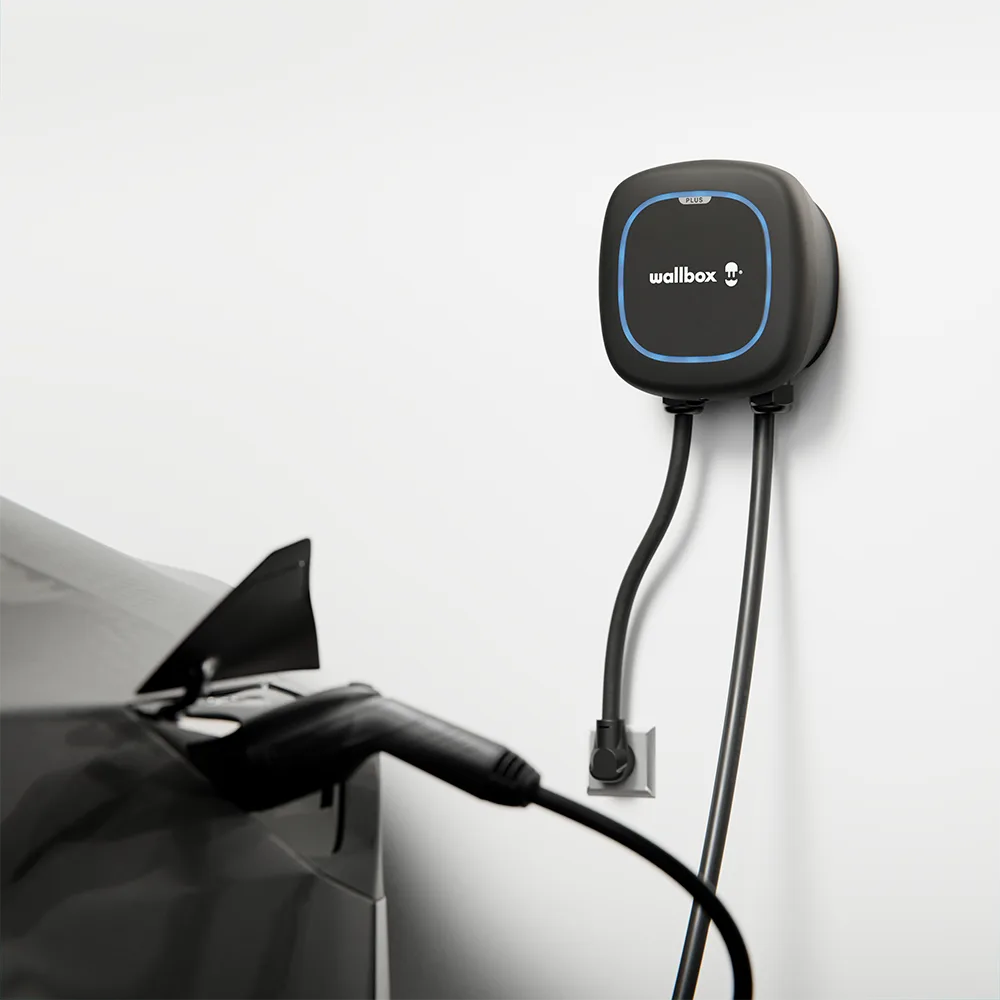
According to Wallbox's official specifications, the Pulsar Plus measures just 7.9 x 4.9 x 3.2 inches, making it roughly the size of a hardcover book. The JuiceBox 48, while not large by any standard, takes up nearly twice the wall space.
How Does the App Experience Compare?
This is where the Wallbox pulls ahead decisively. The myWallbox app provides real-time charging data, scheduling, cost tracking, and remote start/stop. It supports managing multiple chargers from a single account. Firmware updates arrive over the air, and the app is actively maintained with regular feature additions.
The JuiceBox app (formerly Enel X Way) still functions for existing users. You can schedule charging, set power levels, and view session history. But the app has not received meaningful updates since Enel X Way's North American exit. Some users report slower response times and occasional connectivity drops that go unpatched.
For a charger you plan to use daily for 5-10 years, ongoing software support is not a minor consideration.
Which Charger Is Built Better?
Both chargers are well-constructed, but they take different design approaches.
The Wallbox Pulsar Plus uses a round, puck-like design that sits flush against the wall. Its NEMA 4 enclosure rating means it handles rain, snow, and dust without issue. The integrated cable management keeps things tidy, and the LED status ring on the front gives you charging status at a glance without opening the app.
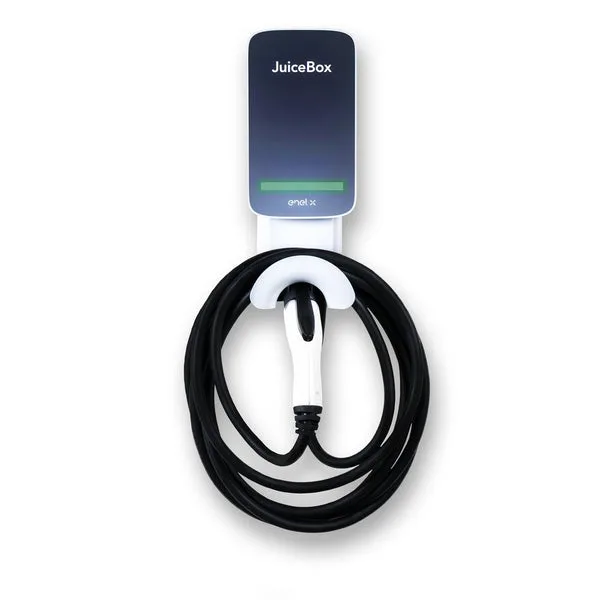
The JuiceBox 48 goes with a more traditional rectangular design. It earned a NEMA 3R rating, which protects against falling rain but is less resistant to windblown water and heavy splashing. The cable management is adequate. One notable feature: the JuiceBox has a built-in cable wrap on the side of the unit.
For outdoor installations, the Wallbox's NEMA 4 rating provides better weather protection.
Does Charging Speed Actually Differ?
Not in any meaningful way. Both chargers max out at 48A on a 60A circuit breaker, delivering 11.5 kW at 240V. That translates to about 37 miles of range per hour of charging for most EVs.
The only scenario where speed might differ is startup behavior. The Wallbox communicates with your EV over Bluetooth before initiating a session, which can add 5-10 seconds versus the JuiceBox's Wi-Fi-only handshake. Once charging starts, both deliver identical power.
Keep in mind: your actual charging speed depends on your EV's onboard charger, not the EVSE. If your car accepts a maximum of 32A (7.7 kW), both the Wallbox and JuiceBox will deliver exactly that.
What About Smart Features and Integration?
The Wallbox Pulsar Plus supports several smart home integrations:
- Power Boost: Monitors your home's electrical load and reduces charging power when other appliances are drawing heavily. This prevents breaker trips without requiring a panel upgrade.
- Eco-Smart: If you have solar panels and a compatible energy meter, the Pulsar Plus can prioritize solar energy for charging.
- OCPP 1.6J: Open Charge Point Protocol support means the Wallbox works with third-party energy management systems.
The JuiceBox 48 also offers smart features, though some are limited after the Enel X transition:
- JuiceNet Green: Previously allowed utility demand-response participation. Status varies by region.
- Alexa and Google Home: Voice control integration remains functional.
- TOU scheduling: Time-of-use rate optimization to charge during off-peak hours.
Who Should Buy Which?
Pick the Wallbox Pulsar Plus if you:
- Want a charger backed by an active, growing company
- Need the smallest possible wall-mounted unit
- Value a responsive, frequently updated app
- Plan to add solar panels and want solar-priority charging
- Want NEMA 4 outdoor weatherproofing
Pick the JuiceBox 48 if you:
- Already own one and it works well (no reason to switch)
- Find one at a steep discount (clearance pricing is common)
- Prefer voice control through Alexa or Google Home
- Don't care about app updates or long-term software support
Frequently Asked Questions
Can both chargers work with Tesla vehicles?
Yes. Both use J1772 connectors, which work with the adapter included with every Tesla. Neither currently offers a NACS (Tesla-native) connector version, so you will need the adapter.
Do I need a 60-amp circuit breaker for either charger?
Yes, if you want full 48A output. The NEC 80% rule requires a 60A breaker for a continuous 48A load. Both chargers can be set to lower amperage if your electrical panel cannot support a 60A circuit.
Is the JuiceBox 48 still worth buying in 2026?
The hardware itself is solid, and existing units continue to charge just fine. The concern is long-term software support and warranty service. If you find a JuiceBox 48 at a significant discount and you are comfortable without ongoing app updates, it remains a functional charger. For a new purchase at full price, the Wallbox is the safer bet.
Which charger is easier to install?
Both are similar. Each supports hardwired installation or NEMA 14-50 plug-in. The Wallbox is lighter (12.8 lbs vs 16.5 lbs) and smaller, which can make mounting in tight spaces easier. Installation cost is about the same for both: $200-500 depending on your electrical setup.
The Verdict
The Wallbox Pulsar Plus wins this comparison for buyers purchasing a new charger in 2026. It matches the JuiceBox on raw charging capability while offering a better app, more compact design, stronger weather protection (NEMA 4 vs NEMA 3R), and the confidence that comes with an actively supported product.
The JuiceBox 48 is not a bad charger. It charged EVs reliably for years and continues to do so. But with Enel X Way's North American exit creating uncertainty around support and updates, recommending it over the Wallbox for new buyers is difficult.
For more EV charger comparisons, check out our ChargePoint Home Flex vs Emporia head-to-head. If you want to see how the Wallbox stacks up against the full field, read our best home EV chargers in 2026 roundup. And for a deep dive on the winner, see our Wallbox Pulsar Plus review.
As an affiliate, we earn from qualifying purchases. This does not affect our editorial independence.
Get Notified When Prices Drop
Join our newsletter for exclusive deal alerts, product comparisons, and energy-saving tips.
What Real Users Say
“Switched from a JuiceBox to the Wallbox Pulsar Plus after Enel X pulled out. The app is way more responsive and the unit itself is tiny. Fits perfectly next to my electrical panel.”
“Owned the JuiceBox 48 for two years before upgrading. Solid charger, but finding support after the Enel X changes became a headache. Wallbox has been smooth so far.”
As an affiliate, we earn from qualifying purchases. This does not affect our editorial independence.
Related Articles
Autel MaxiCharger Home 40A Review: Solid Value With NACS Built In
In-depth review of the Autel MaxiCharger Home 40A EV charger. We test its adjustable 16-40A output, NACS support, app features, and 25-foot cable.
Best EV Charger for Tesla in 2026: 5 Picks for Every Budget
The 5 best EV chargers for Tesla in 2026. From the Tesla Wall Connector to budget picks, find the right charger for your Model 3, Y, S, or X.
Tesla Universal Wall Connector Review: Worth It for Non-Tesla Drivers Too?
In-depth review of the Tesla Universal Wall Connector. We cover its 48A output, NACS + J1772 compatibility, 24-foot cable, Wi-Fi updates, and 4-year warranty.