EcoFlow PowerStream Review: The Smartest Balcony Solar System?
In-depth review of EcoFlow PowerStream microinverter with 800W output, battery storage integration, and app control. Is it worth the premium price?
As an affiliate, we earn from qualifying purchases. This does not affect our editorial independence.
Pros
- ✓Unique battery storage integration stores excess solar energy for nighttime use
- ✓Dual MPPT tracks each panel independently for maximum efficiency
- ✓Excellent EcoFlow app with real-time monitoring and smart scheduling
- ✓IP67 rated for outdoor installation in any weather
- ✓Works with existing EcoFlow DELTA portable power stations
Cons
- ✗Premium price compared to basic microinverter systems
- ✗Battery storage requires separate EcoFlow power station purchase
- ✗800W output may be limiting as regulations change
- ✗Proprietary ecosystem locks you into EcoFlow products
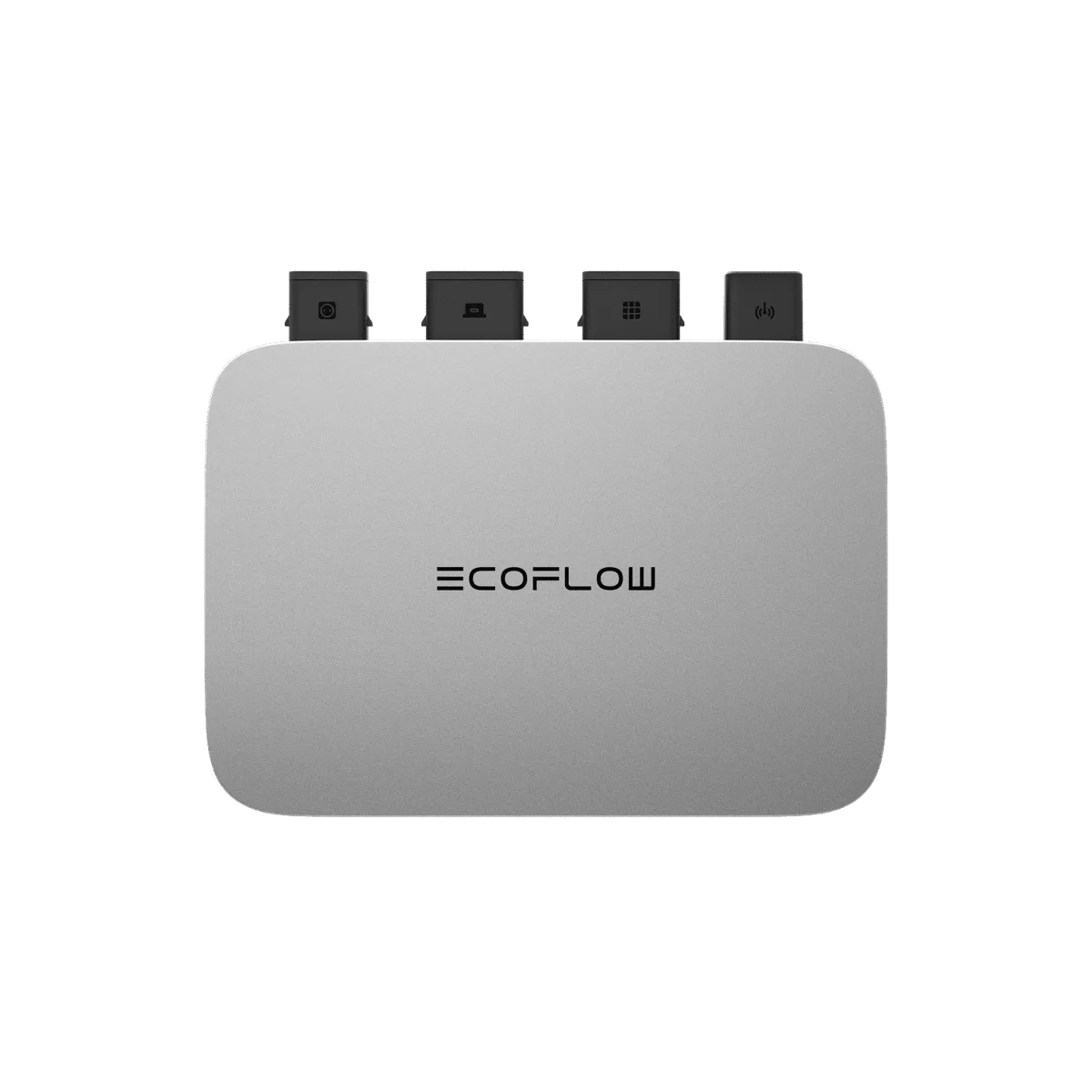
The EcoFlow PowerStream is the first balcony solar microinverter that can store excess energy in a portable power station, pushing self-consumption from a typical 40% all the way up to 90%. With dual MPPT, 800W output, IP67 weatherproofing, and a polished app experience, it sets a new standard for apartment solar -- but the premium price and proprietary ecosystem deserve careful consideration.
What Makes the EcoFlow PowerStream Different?
Balcony solar systems (known as Balkonkraftwerke in Germany, where they've become enormously popular) have a fundamental problem: they generate the most electricity during midday hours when you're often not home to use it. That excess power feeds into the grid, and in most cases, you get little or nothing in return. Your self-consumption rate sits around 30-40%, which means more than half your solar energy goes to waste.
EcoFlow's PowerStream tackles this head-on. It's a microinverter that connects to up to two solar panels and plugs directly into a standard Schuko wall outlet -- just like any other plug-and-play balcony system. But here's the twist: it can also connect to an EcoFlow DELTA portable power station. When your home consumption is low, the PowerStream routes excess solar energy into the battery instead of sending it to the grid. At night or during peak hours, the stored energy feeds back into your home. EcoFlow claims this raises self-consumption to around 90%.
That's a genuinely unique feature. No other balcony solar system on the market offers integrated battery storage with smart energy management.
Key Specifications
| Spec | Detail |
|---|---|
| AC Output | 800W |
| Max PV Input | 800W (2 x 400W panels) |
| MPPT Controllers | 2 (dual independent tracking) |
| Grid Connection | Schuko plug (plug-and-play) |
| IP Rating | IP67 (fully weatherproof) |
| Operating Temperature | -40°C to +50°C |
| Dimensions | 242 x 169 x 33 mm |
| Weight | ~3 kg (microinverter only) |
| Connectivity | Wi-Fi + Bluetooth (EcoFlow App) |
| Warranty | 10 years |
All specifications sourced from EcoFlow's official product page.
How Does the Battery Integration Work?
The PowerStream's energy management operates through three priority levels, all controlled automatically via the EcoFlow app:
- Home consumption first -- Solar power feeds directly into your apartment through the Schuko outlet, offsetting whatever appliances are running.
- Battery storage second -- When home demand drops below solar production, excess energy charges a connected EcoFlow DELTA power station (DELTA 2, DELTA 2 Max, or DELTA Max).
- Grid feed-in last -- Only after the battery is full does any remaining power go to the grid.
At night, the process reverses. The app monitors your home's base load and discharges the battery at exactly the right rate to cover it. You can set schedules, define minimum battery levels, and track everything in real time.
This is where the PowerStream pulls ahead of every competitor. Standard microinverters are "dumb" -- they push all power to the grid connection with no storage option. The PowerStream turns a simple balcony setup into a genuine home energy management system.
Is the Dual MPPT Worth It?
Absolutely. Each of the two solar panel inputs has its own Maximum Power Point Tracker. In practical terms, this means if one panel is partially shaded (common on balconies where railings, neighboring buildings, or overhangs cast shadows at certain times of day), the other panel still operates at full efficiency. With a single MPPT system, one shaded panel drags down the entire array.
For balcony installations where perfect, unobstructed sun exposure is rare, dual MPPT can mean 10-25% more energy harvested over the course of a year compared to single-MPPT alternatives.
App Experience and Smart Features
The EcoFlow app (iOS and Android) connects via Wi-Fi or Bluetooth and provides:
- Real-time power flow visualization showing solar input, home consumption, battery charge/discharge, and grid feed-in simultaneously
- Historical production data with daily, weekly, and monthly breakdowns
- Smart scheduling to set when the battery should charge or discharge
- Savings calculator tracking your actual electricity cost reduction
- Firmware updates delivered over the air
The app is well-designed and responsive. Compared to the clunky web portals some competitors offer, EcoFlow's mobile-first approach is a clear advantage. You can check your system's performance from anywhere, and push notifications alert you to any issues.
Real-World Performance: Who Is This For?
The PowerStream fits best in these scenarios:
Apartment renters in Europe -- Plug-and-play installation requires no electrician and no landlord permission in most countries. Germany's simplified registration process for systems up to 800W makes this especially straightforward.
Existing EcoFlow owners -- If you already have a DELTA 2 or DELTA 2 Max for camping or backup power, the PowerStream gives that battery a daily job instead of sitting idle between trips.
High electricity price markets -- At current European electricity rates (often $0.30-0.40/kWh), the battery storage feature significantly accelerates payback. Without storage, payback might take 5-6 years. With storage boosting self-consumption to 90%, some users report payback in 3-4 years.
How It Compares to the Competition
| Feature | EcoFlow PowerStream | Anker SOLIX RS40P | Priwatt priBalcony Duo |
|---|---|---|---|
| Max Output | 800W | 800W | 800W |
| MPPT | Dual | Single | Single |
| Battery Storage | Yes (EcoFlow DELTA) | No | No |
| App Control | Full (Wi-Fi + BT) | Basic monitoring | Web portal |
| IP Rating | IP67 | IP67 | IP65 |
| Smart Scheduling | Yes | No | No |
| Price (inverter only) | $$$ | $$ | $ |
The Anker SOLIX RS40P is the closest mainstream competitor. It matches the PowerStream on output and weatherproofing but lacks battery integration, dual MPPT, and advanced app features. It costs noticeably less, making it the better pick if you just want simple, affordable solar without storage.
The Priwatt priBalcony Duo is popular in Germany for its budget-friendly pricing and straightforward setup. It does the basics well but offers fewer smart features and only IP65 protection. Good enough for covered balconies, but the PowerStream is the safer choice for fully exposed installations.
If battery storage and smart energy management matter to you, the PowerStream has no real competition right now. If you just want panels producing power as cheaply as possible, the Anker or Priwatt options make more financial sense.
For a full breakdown, check our best balcony solar systems for 2026.
Should You Buy the EcoFlow PowerStream?
The PowerStream earns an 8/10 from us. It's the most technically advanced balcony solar system available, and the battery storage integration is a major advantage for self-consumption. Dual MPPT, IP67, a 10-year warranty, and a polished app round out a strong package.
The two points it loses come down to cost and ecosystem lock-in. The microinverter itself costs more than basic alternatives, and the battery storage feature only works with EcoFlow's own (separately purchased) power stations. If you don't already own one, the total system cost rises significantly. And once you're in the EcoFlow ecosystem, switching brands means replacing everything.
Buy the PowerStream if: You want maximum self-consumption, already own an EcoFlow DELTA, or live in a high-electricity-cost market where the faster payback justifies the premium.
Consider alternatives if: You want the cheapest possible balcony solar setup, don't need battery storage, or prefer brand-agnostic hardware.
Frequently Asked Questions
Can I install the EcoFlow PowerStream myself?
Yes. The PowerStream is designed for DIY installation. You mount the microinverter near your panels, connect the solar panel MC4 cables, and plug the AC output into a standard Schuko wall outlet. No electrician required. Most users complete installation in about an hour. In Germany, you'll need to register the system with your grid operator through a simplified online form.
Which EcoFlow batteries work with the PowerStream?
The PowerStream is compatible with the EcoFlow DELTA 2, DELTA 2 Max, and DELTA Max. It connects to the battery via a dedicated cable (included in most bundles). The system does not currently support the DELTA Pro or RIVER series for grid feed-in integration, though EcoFlow has hinted at expanding compatibility.
How much money can the PowerStream save per year?
With two 400W panels in a location receiving 900-1100 kWh/m2 of annual solar irradiance (typical for Central Europe), expect annual production of 600-900 kWh. At European electricity rates of $0.30-0.40/kWh, that's roughly $180-360 per year. With battery storage raising self-consumption from 40% to 90%, your actual savings could be $160-320 per year versus $70-145 without storage.
Does the PowerStream work during a power outage?
No. Like all grid-tied microinverters, the PowerStream shuts down during a grid outage for safety reasons (anti-islanding protection). However, if you have a connected EcoFlow DELTA battery, you can still use that battery's AC outlets to power devices directly during an outage -- just not through the PowerStream's grid connection.
Is 800W enough for a balcony solar system?
For most apartments, 800W is the sweet spot. It matches the current simplified registration limit in Germany and several other European countries. A typical two-person apartment with moderate electricity use (2,500-3,500 kWh/year) can offset 20-30% of total consumption with an 800W system, or more with battery storage. As regulations evolve, some countries are raising limits, but 800W remains the most practical plug-and-play tier.
As an affiliate, we earn from qualifying purchases. This does not affect our editorial independence.
Get Notified When Prices Drop
Join our newsletter for exclusive deal alerts, product comparisons, and energy-saving tips.
What Real Users Say
“The PowerStream is the only balcony solar system that actually stores excess energy. My DELTA 2 charges during the day and powers my apartment at night.”
“Setup took about an hour and the app shows exactly how much I'm saving. Already seeing 30-40% lower electricity bills.”
As an affiliate, we earn from qualifying purchases. This does not affect our editorial independence.
Related Articles
Best Balcony Solar Kits for Apartments in 2026
The best plug-and-play balcony solar kits for apartment dwellers. We compare top systems from EcoFlow, Anker, Priwatt, Yuma, and Green Solar.
Yuma Basic 800 vs. Green Solar 800W: Which Balcony Solar Kit Wins?
Yuma Basic 800 or Green Solar 800W? We compare both balcony solar kits: panels, microinverter, monitoring, warranty, and value in a direct head-to-head.
Anker SOLIX RS40P vs EcoFlow PowerStream: Which Balcony Solar System Wins?
Head-to-head comparison of the Anker SOLIX RS40P and EcoFlow PowerStream balcony solar systems. We break down specs, features, and value.