Yuma Basic 800 vs. Green Solar 800W: Which Balcony Solar Kit Wins?
Yuma Basic 800 or Green Solar 800W? We compare both balcony solar kits: panels, microinverter, monitoring, warranty, and value in a direct head-to-head.
As an affiliate, we earn from qualifying purchases. This does not affect our editorial independence.
Pros
- ✓Both kits deliver 800W feed-in at a fair price point
- ✓Plug-and-play Schuko connection, no electrician needed
- ✓Yuma offers bifacial panels with a 30-year warranty
- ✓Green Solar includes WiFi monitoring at no extra cost
Cons
- ✗Yuma has slightly less installed panel wattage (800Wp vs. 880Wp)
- ✗Green Solar does not offer bifacial panels
- ✗Neither kit supports optional battery storage integration
Head-to-Head Comparison
| Yuma Basic 800Our Pick | Green Solar 800W | |
|---|---|---|
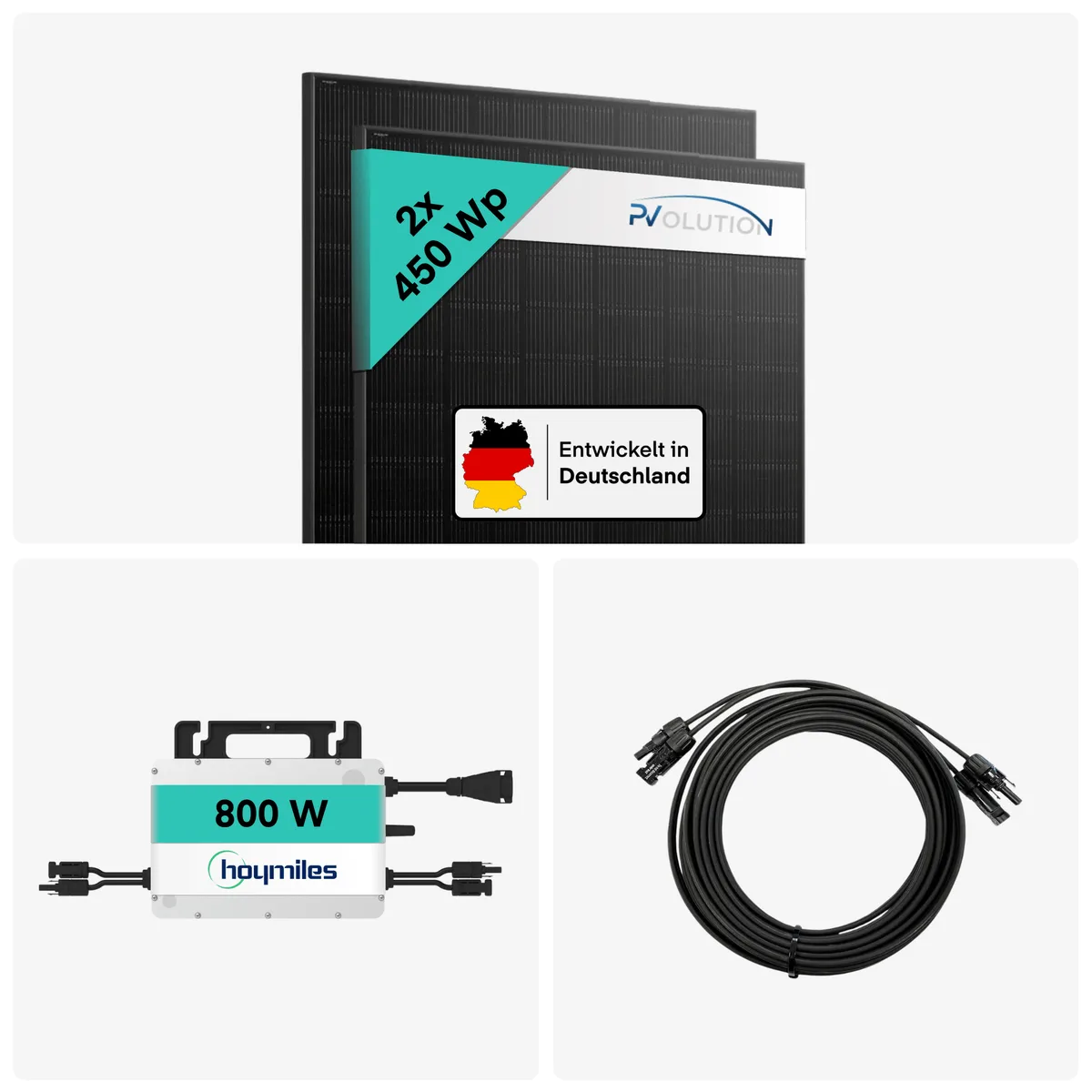
| systemWattage | 800Wp | 880Wp |
| panelType | Bifacial monocrystalline | Monocrystalline Full Black |
| microinverter | Hoymiles HMS-800W-2T | 800W with WiFi |
| Warranty | 30 years | 25 years |
| Check Price | Check Price |
The Yuma Basic 800 and Green Solar 800W are two of the most popular budget balcony solar kits in Europe. Both cost under 700 euros, deliver 800W of feed-in power, and connect with a standard plug. But which one is better? We compare panels, microinverters, monitoring, warranty coverage, and overall value so you can pick the right kit for your balcony.
Why Compare These Two?
The Yuma Basic 800 and Green Solar 800W target the same buyer: someone who wants a functional, affordable balcony solar kit without the premium price of brands like EcoFlow or Anker. Both ship primarily to Germany, Austria, and neighboring European countries.
The key difference comes down to panel technology and monitoring. Yuma uses bifacial panels paired with the well-known Hoymiles microinverter. Green Solar counters with higher total panel wattage and built-in WiFi monitoring. Here is how they stack up.
Side-by-Side Specifications
| Feature | Yuma Basic 800 | Green Solar 800W |
|---|---|---|
| Total Panel Wattage | 800Wp (2 panels) | 880Wp (2 panels) |
| Panel Type | Bifacial monocrystalline | Monocrystalline Full Black |
| Microinverter | Hoymiles HMS-800W-2T | 800W with WiFi |
| MPPT Trackers | 2 (independent) | 2 |
| Grid Connection | Schuko plug (plug-and-play) | Schuko plug (plug-and-play) |
| Monitoring | Via Hoymiles S-Miles (requires DTU add-on) | WiFi built into inverter |
| Warranty | 30 years (product + performance) | 25 years (product) |
| Panel Design | Standard (silver/blue frame) | Full Black |
Which Panels Produce More Energy?
On paper, Green Solar wins this round: 880Wp versus 800Wp for the Yuma. That is a 10% higher installed wattage. But installed wattage does not always translate directly to more energy produced.
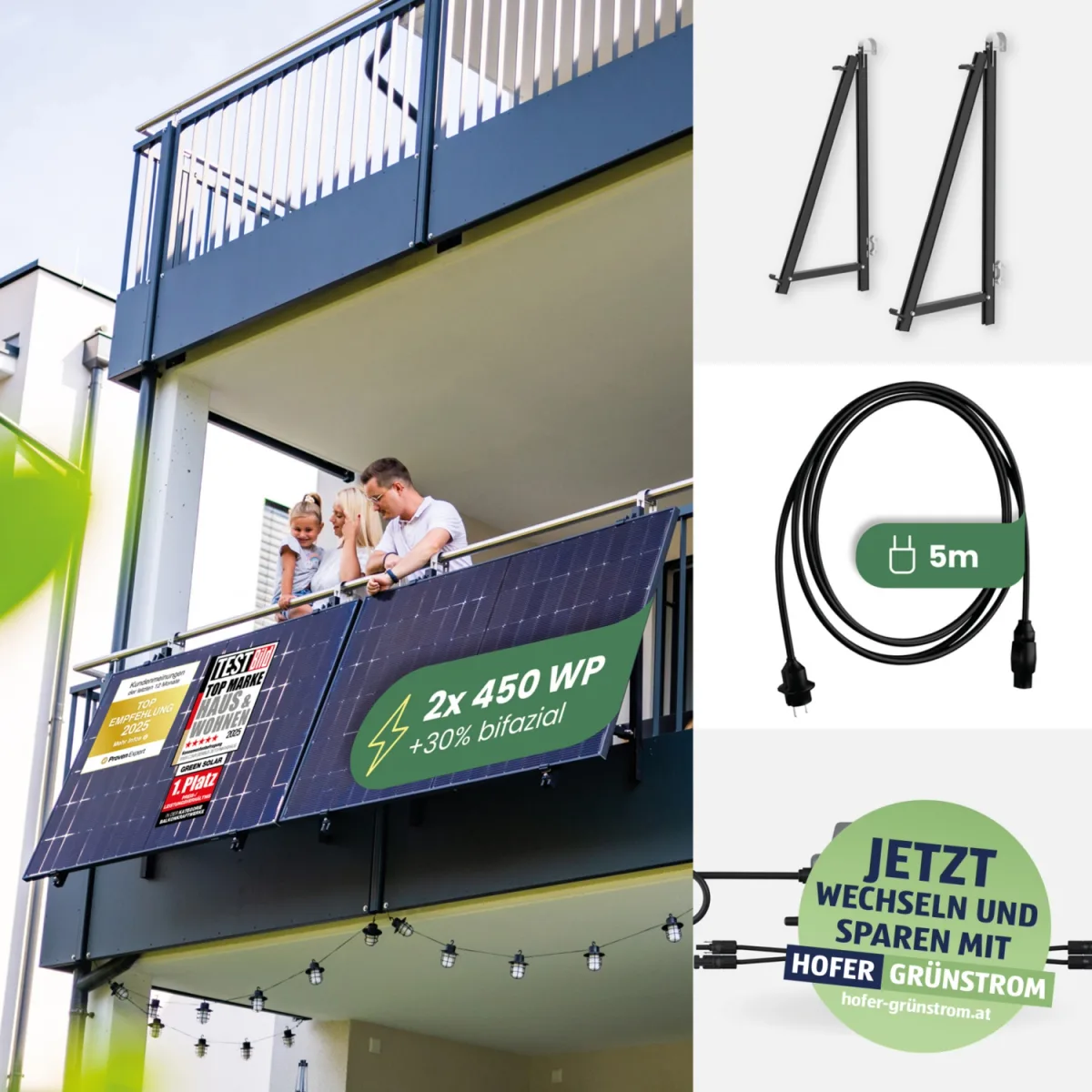
The Yuma Basic 800 uses bifacial panels. These panels capture light from both sides. Reflections from the floor, bright walls, or the surface below the panel can boost output by 5-15%, depending on the installation location. According to Yuma's product specifications, the bifacial gain is most noticeable when panels are mounted on a railing with a light-colored wall or floor behind them.
On a dark balcony with minimal reflective surfaces, the Green Solar 800W and its higher wattage will outperform. On a bright balcony with white walls or a light floor, the Yuma can match or even exceed the Green Solar's output despite lower rated wattage.
Bottom line: Your balcony environment determines which panel type wins. Bright surroundings favor Yuma. Dark surroundings favor Green Solar.
How Do the Microinverters Compare?
The Hoymiles HMS-800W-2T in the Yuma kit is one of the most widely used microinverters in Europe. According to Hoymiles' official specifications, it achieves up to 96.7% conversion efficiency with two independent MPPT trackers. Each input optimizes its panel separately, which helps when one panel gets partial shade while the other stays in full sun.
The trade-off: Hoymiles does not include built-in WiFi. To monitor your production, you need a separate DTU (Data Transfer Unit) that costs 20-40 euros and connects the inverter to the S-Miles cloud platform via your home WiFi.
The Green Solar inverter has WiFi built in. Connect it to your network during setup and you can track production in real time through a browser or app. No extra hardware, no extra cost.
For buyers who want to see their production data (and most people do), Green Solar's approach is more convenient. For buyers who prioritize a proven inverter brand with years of track record, the Hoymiles gives more confidence.
How Does the Warranty Compare?
| Warranty Aspect | Yuma Basic 800 | Green Solar 800W |
|---|---|---|
| Product Warranty | 30 years | 25 years |
| Performance Guarantee | 30 years | Not separately specified |
| Inverter Warranty | 12 years (Hoymiles standard) | Included in product warranty |
Yuma has a clear edge here. Thirty years covering both product and performance is among the longest warranties in the balcony solar market. Green Solar's 25-year product warranty is still strong, but five years shorter.
Who Should Buy Which?
Buy the Yuma Basic 800 if you:
- Want a proven Hoymiles microinverter with a long track record
- Have a bright balcony where bifacial panels can capture reflected light
- Value the longest possible warranty (30 years)
- Already own a Hoymiles DTU or do not need production monitoring
Buy the Green Solar 800W if you:
- Want WiFi monitoring included without buying extra hardware
- Prefer higher installed panel wattage (880Wp vs. 800Wp)
- Like the sleek Full Black panel design
- Have a darker balcony where bifacial panels would not add much benefit
Both kits are solid entry points into balcony solar. For more options, check out our best balcony solar kits for apartments roundup and the full best balcony solar systems 2026 ranking.
Frequently Asked Questions
Which kit produces more electricity per year?
It depends on your setup. On a bright balcony with reflective surfaces, the Yuma Basic 800's bifacial panels can match or beat the Green Solar despite lower rated wattage. On a dark balcony without reflection, the Green Solar 800W's higher wattage (880Wp vs. 800Wp) gives it a 5-10% edge.
Can I swap the microinverter later?
Yes. Both kits use standard MC4 connectors on the panels. You can replace the microinverter with any compatible 800W model without changing the panels. If you are in Germany, remember to update the Marktstammdatenregister after any hardware change.
Do I need an electrician for either kit?
No. Both kits come with a Schuko plug and are designed for DIY installation. Mount the panels, connect them to the microinverter with the included MC4 cables, and plug the inverter into your outdoor outlet. The whole process takes one to two hours.
Are these kits available outside Germany?
Yes, both ship to Austria and other European countries. Green Solar is Austrian-based and ships across the DACH region. Yuma also ships internationally through Amazon. Keep in mind that feed-in regulations differ by country, so check your local rules before purchasing.
Can I add battery storage to either kit?
Neither the Yuma Basic 800 nor the Green Solar 800W supports optional battery integration. If battery storage is important to you, consider the EcoFlow PowerStream, which works with EcoFlow portable power stations. See our best balcony solar kits for apartments for details.
Our Verdict
The Yuma Basic 800 takes our recommendation by a small margin. The proven Hoymiles microinverter, bifacial panel technology, and 30-year warranty give it an edge for most buyers. But the Green Solar 800W fights back with built-in WiFi monitoring, higher panel wattage, and a clean Full Black design. Both kits cost under 700 euros and pay for themselves within two to three years at European electricity prices. You will not go wrong with either choice.
As an affiliate, we earn from qualifying purchases. This does not affect our editorial independence.
Get Notified When Prices Drop
Join our newsletter for exclusive deal alerts, product comparisons, and energy-saving tips.
What Real Users Say
“The Hoymiles inverter in the Yuma kit is rock solid. Same model used in professional rooftop installations. Six months in, zero issues.”
“Green Solar's WiFi monitoring is surprisingly good for a budget kit. You can see exactly what each panel produces without buying extra hardware.”
As an affiliate, we earn from qualifying purchases. This does not affect our editorial independence.
Related Articles
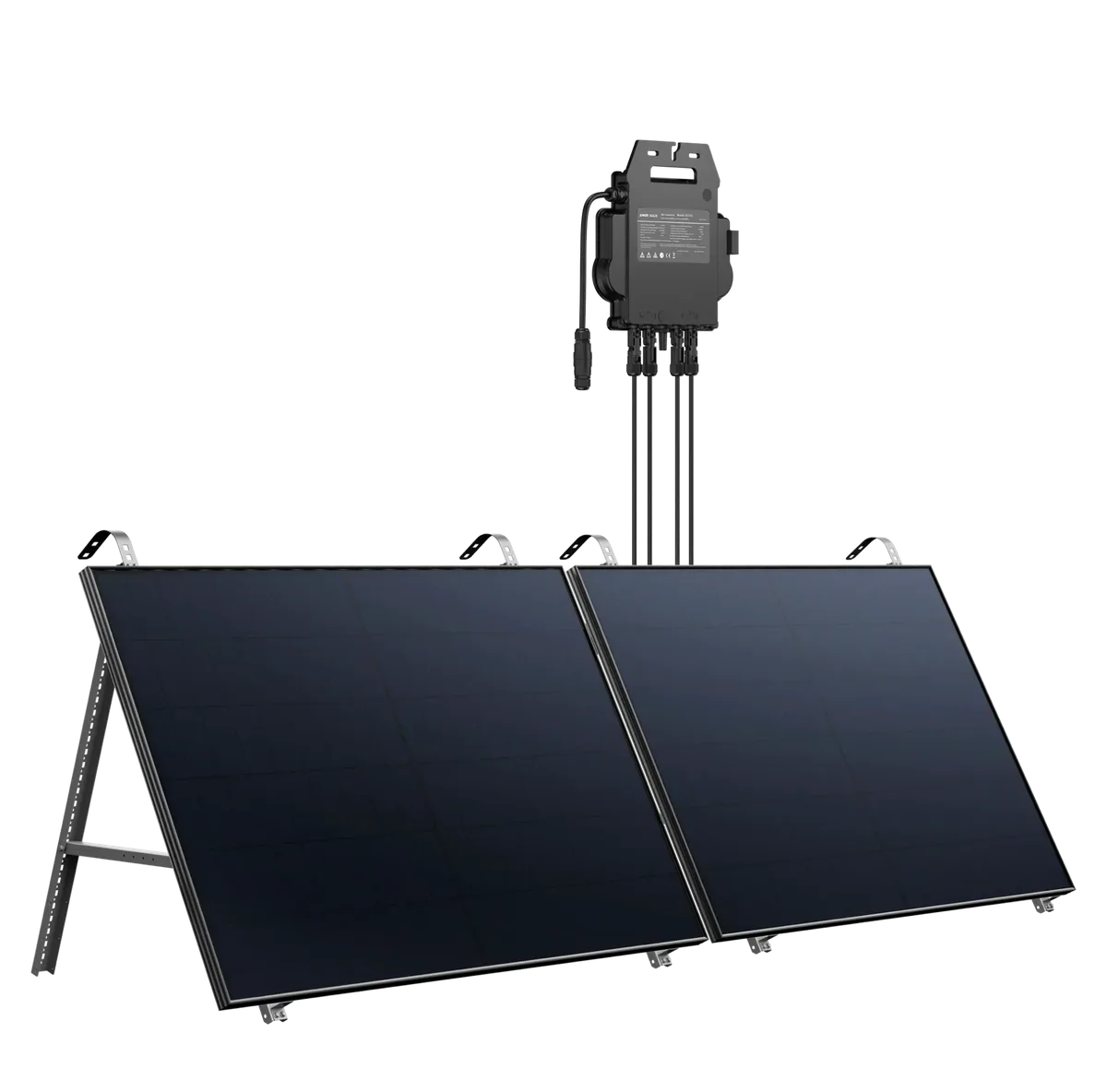
Best Balcony Solar Kits for Apartments in 2026
The best plug-and-play balcony solar kits for apartment dwellers. We compare top systems from EcoFlow, Anker, Priwatt, Yuma, and Green Solar.
Anker SOLIX RS40P vs EcoFlow PowerStream: Which Balcony Solar System Wins?
Head-to-head comparison of the Anker SOLIX RS40P and EcoFlow PowerStream balcony solar systems. We break down specs, features, and value.
3 Best Balcony Solar Systems in 2026: Plug-In Solar Power for Apartments
The 3 best balcony solar systems for 2026. We compare the Anker SOLIX RS40P, EcoFlow PowerStream, and Priwatt priBalcony Duo on specs, value, and ease of setup.